





Canada’s Under-16 Social Media Ban: What Bill C-34 Means for Families, Privacy and TikTok
Syed Jaweed
Canada is considering one of the most significant changes to online life since the rise of social media.
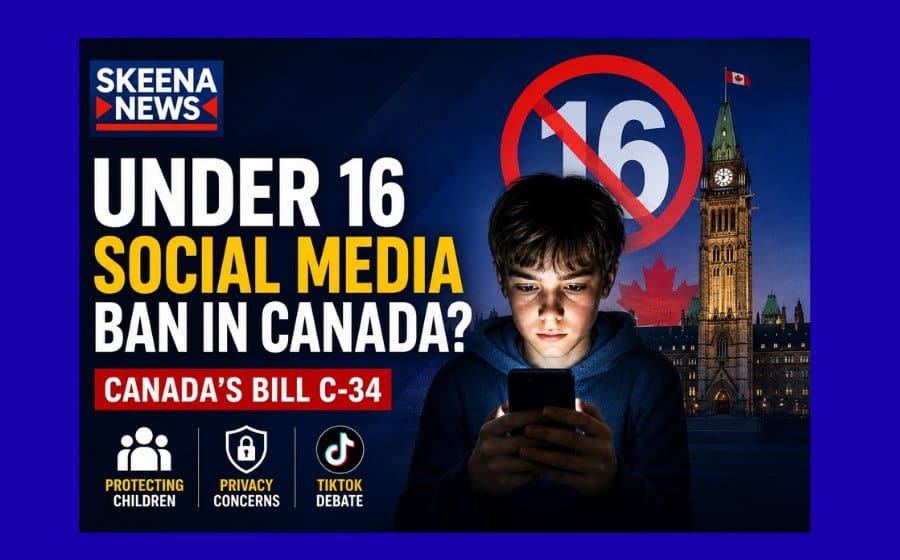
The federal government’s proposed Safe Social Media Act (Bill C-34) would introduce a minimum age of 16 for social media accounts while creating a new Digital Safety Commission of Canada to oversee compliance and enforce new safety standards on platforms.
Supporters argue the legislation is necessary to protect children from harmful content, online exploitation, cyberbullying and addictive platform design. Critics warn the proposal could create new privacy concerns and force Canadians to verify their identities online.
The debate has quickly become one of the most closely watched technology policy battles in the country.
What Would Bill C-34 Do?
The legislation would require social media platforms to prevent children under the age of 16 from holding accounts unless a platform can demonstrate sufficient safeguards and receive an exemption from regulators.
The proposal would also create a Digital Safety Commission of Canada with authority to investigate platforms, issue compliance orders and levy significant financial penalties.
Under the proposed framework, companies could face fines of up to the greater of $10 million or three per cent of global revenue for non-compliance, with more serious offences carrying penalties of up to the greater of $20 million or five per cent of global revenue.
The legislation would also require platforms to take stronger action against child sexual exploitation material and non-consensual intimate images.
Australia Already Tried It
Canada is not the first country to move in this direction.
Australia implemented its own under-16 social media restrictions in late 2025, creating a global test case for age-based access controls.
Supporters say the Australian model demonstrates governments are willing to intervene when social media platforms fail to adequately protect young people.
However, critics point to reports suggesting many minors continue accessing social media through workarounds such as VPNs, alternate accounts and age-verification bypass methods.
Even Australia’s eSafety Commissioner has publicly acknowledged the challenges of enforcing age restrictions across the internet.
The Australian experience is now being closely examined by lawmakers around the world, including in Canada.
Why Supporters Want the Ban
Child safety advocates, medical professionals and several provincial leaders have backed stronger regulation.
Organizations focused on child protection argue that social media platforms have become increasingly effective at capturing attention through endless scrolling, algorithmic recommendations and engagement-driven content.
Supporters say children are often exposed to harmful material long before parents or schools can intervene.
They argue that responsibility should shift from families to the companies designing and operating these platforms.
For many supporters, the question is simple: if governments regulate products that can affect children’s health and safety in the physical world, why should digital platforms be treated differently?
Why Critics Are Concerned
Opponents are not necessarily defending social media companies.
Instead, many privacy experts and civil liberties advocates are asking how an under-16 ban would actually work.
To determine who is under 16, platforms may need age-verification systems capable of distinguishing minors from adults.
Critics argue that could require Canadians to provide additional personal information, government identification or biometric data.
Some legal experts have also raised concerns about free expression, particularly for older teenagers who use social media to communicate, create content, operate small businesses or participate in public discussions.
Others question whether governments can realistically enforce age restrictions in a borderless digital environment.
The TikTok Debate
TikTok has become part of the discussion because of ongoing national security concerns surrounding its parent company, ByteDance.
Canadian authorities previously ordered TikTok’s Canadian operations to wind down following a national security review before later reaching a settlement that allowed operations to continue under specific security commitments.
ByteDance is headquartered in Beijing and has faced scrutiny from governments in several Western countries regarding data governance and potential foreign influence risks.
At the same time, it is important to separate national security concerns from allegations involving online hate content.
There is documented evidence that anti-South Asian and anti-immigrant content has circulated on multiple social media platforms in Canada.
Researchers and government investigations have also identified coordinated bot networks and inauthentic online campaigns attempting to influence public discourse.
However, investigators have found no verified evidence that TikTok or ByteDance intentionally promoted anti-Indian racism in Canada.
The distinction matters.
The issue is not whether harmful content exists online—it clearly does. The question is whether platforms are responsible because they deliberately promote such content or because engagement-driven algorithms can amplify controversial material regardless of who creates it.
What It Means for Northern British Columbia
The debate may feel like an issue for Ottawa, Toronto or Vancouver, but it also affects communities across northwestern British Columbia.
For many young people in rural and remote communities, social media serves as more than entertainment. It is often a primary tool for communication, education, networking and maintaining connections with friends and family.
Parents concerned about online harms may welcome stronger safeguards.
Others may worry that age-verification systems could create privacy concerns or restrict access to valuable online communities.
As Parliament begins debating Bill C-34, Canadians will be forced to balance two competing priorities: protecting children online while preserving privacy and access in an increasingly digital society.
Whether Canada ultimately follows Australia’s path remains uncertain, but the conversation is no longer about whether social media should be regulated.
The debate has shifted to how far governments should go.