





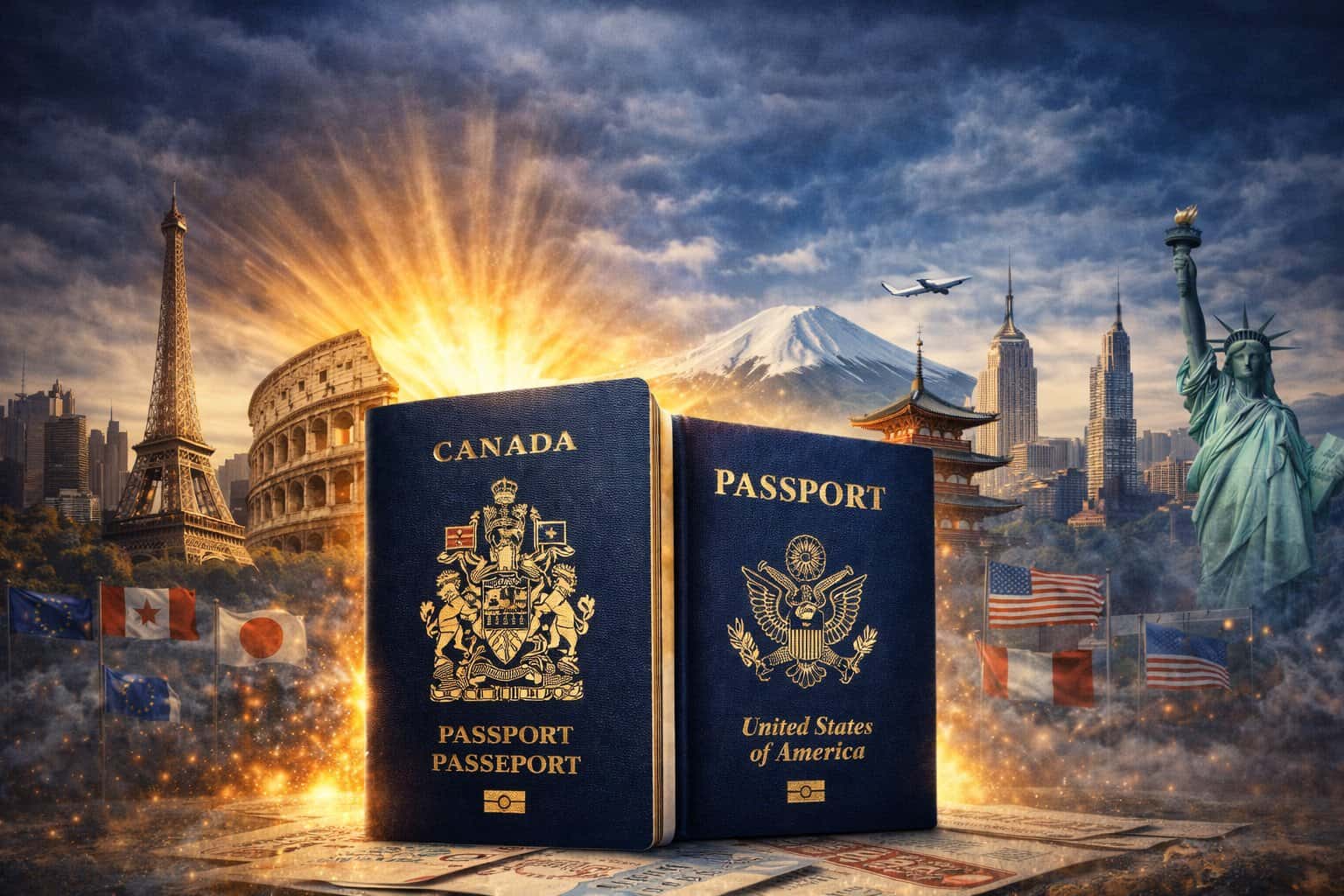
SKEENA NEWS ANALYSIS — In the rapidly recalibrating world of global mobility, the Canadian passport has achieved a significant milestone: for the first time in standardized tracking history, it consistently outperforms its American counterpart. This shift in “soft power” is not just a statistical win for Ottawa; it reflects a fundamental change in international trust that is directly influencing how residents of the Skeena and Bulkley Valleys plan their global exploration.
As Northwest B.C. travelers look toward 2026, they are increasingly leveraging one of the world’s most powerful travel documents to pivot away from traditional transborder dependencies in favor of culturally rich, safe, and “authentic” overseas destinations.
Passport Power: The Canada-US Divergence
The assertion that the Canadian passport is now superior to the U.S. version is verified by the October 2025 Henley Passport Index. Canada currently ranks 9th globally, providing visa-free access to 183 destinations, while the United States has dropped to 12th place with access to only 180.
| Metric (2025) | Canada | United States |
| Henley Global Rank | 9th | 12th |
| Visa-Free Destinations | 183 | 180 |
| Arton Mobility Score | 170 | 169 |
Export to SheetsThis divergence is largely attributed to Canada’s stable diplomatic reputation and the U.S.’s struggle with visa reciprocity—the principle where nations grant equal access to each other’s citizens. While the U.S. has faced “precipitous declines” due to political isolationism and restricted access, Canada has maintained its international credibility as a stable and welcoming partner.
The “Transborder Default” is Cooling
For decades, the United States has been the default international destination for Northwest B.C. residents. However, 2025 has seen a pronounced cooling of interest in transborder travel. In the second quarter of 2025, Canadian visits to the U.S. decreased by 21.6% year-over-year.
Driven by ongoing trade tensions and the imposition of 35% U.S. tariffs, many Canadians are consolidations multiple short U.S. trips into a single, longer international journey. The “boycott” sentiment and reports of increased border scrutiny have prompted Skeena travelers to seek alternatives in regions where their passport is met with greater warmth.
The European Renaissance and the “Authenticity” Crave
The biggest beneficiaries of this shift are overseas markets. Bookings for Europe in summer 2025 increased by 32%. This “European Renaissance” is driven by a desire for safety, heritage, and high standards of public service in nations like Portugal, Switzerland, and the Netherlands.
- The Authenticity Crave: Market research shows that travelers, particularly millennials, are “craving what’s real”—seeking experiences that foster a sense of belonging. This is driving the surge in biodiversity-focused destinations like Costa Rica and Iceland.
- The Yen Value: Japan has seen a 23% increase in Canadian visitors in early 2025, fueled by its blend of tradition and high-tech modernity, alongside the exceptional value provided by the depreciated Yen.
Consular Realities and the Geography of Risk
Data from Global Affairs Canada (GAC) reveals the different risk profiles of these top destinations. Interestingly, the United States remains the location with the most consular cases (739), many involving legal and administrative issues. In contrast, destinations like Mexico and Thailand see higher rates of medical-related cases among older travelers and retirees.
Top International Destinations by Intent (2025)
- United States: 25.6M visits (declining)
- Mexico: 1.87M visits (winter sun staple)
- France: 756,000 visits (heritage and gastro-tourism)
- United Kingdom: 615,000 visits (Commonwealth ties)
- Japan: 285,000+ visits (high growth frontier)
Strategic Outlook for 2026: Digital Borders and Beyond
As we look toward 2026, the global mobility landscape will continue to evolve with the introduction of the European Travel Information and Authorisation System (ETIAS). While Canadians will retain their visa-free status, the new digital requirement reflects a broader global shift toward secure, digitalized border management.
For the residents of the Skeena and Bulkley Valleys, the future of travel is one of continued diversification. Armed with one of the world’s most powerful passports, the “freedom to travel” is becoming a central part of the Northern identity—fostering a truly global perspective on exploration that reaches far beyond the southern border.
Skeena News Tip: Before planning your 2026 European getaway, ensure you are prepared for the new ETIAS digital authorization, which will become a requirement for Canadian travelers visiting the Schengen Area.