




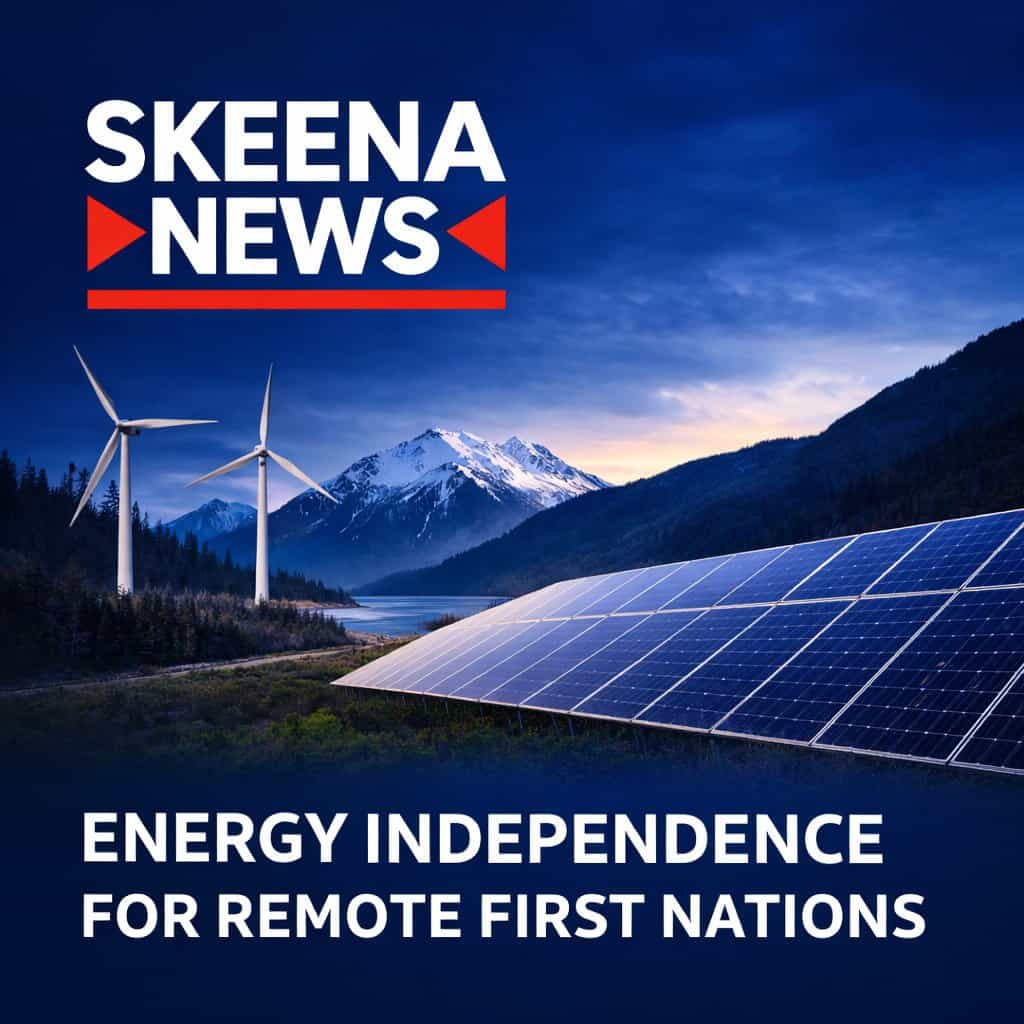
VICTORIA / SKIDEGATE — In a major step toward regional energy independence, the B.C. government announced a $6.6 million funding boost on March 12, 2026, for 13 remote First Nations to transition away from fossil fuel dependence.
The funding, announced by Adrian Dix, Minister for Energy and Climate Solutions, is part of the Community Energy Diesel Reduction (CEDR) program—a pillar of the province’s broader CleanBC strategy. The initiative aims to reduce the environmental risks and exorbitant costs associated with transporting diesel to off-grid communities while fostering true “energy sovereignty”.
Skeena and North Coast – Resilience in Action
The disbursements are particularly critical for the Skeena and North Coast regions, where geographical isolation has traditionally made energy security a challenge.
- Skidegate Band Council (Haida Gwaii): Awarded $500,000 to facilitate deep energy-efficiency upgrades for 74 homes. This project focuses on lowering residential heating costs and improving comfort for elders and families.
- Tsay Keh Dene Nation: Received $1.5 million to complete the design of a massive 3.5-megawatt solar power project. This initiative is a cornerstone of the nation’s plan to eliminate diesel generators entirely.
Regional Funding Highlights
| First Nation | Funding Amount | Primary Project | Impact Area |
| Tsay Keh Dene | $1,500,000 | 3.5 MW Solar Design | Diesel displacement |
| Ulkatcho | $1,100,000 | 3.8 MW Solar Plant Testing | Renewable grid integration |
| Xeni Gwet’in | $870,000 | Solar-Pumped Storage | Long-term energy storage |
| Skidegate | $500,000 | 74 Home Energy Upgrades | Residential efficiency |
| Heiltsuk | $500,000 | Community Hall Efficiency | Public infrastructure |
Defining Energy Sovereignty
For many remote nations, energy sovereignty is about more than just carbon reduction—it is about control.
“These projects allow nations to own and operate their own power sources, decoupling their future from the volatile prices and delivery risks of imported diesel,” said Minister Dix.
By investing in localized solar, pumped storage, and home efficiency, the CEDR program helps communities retain wealth locally rather than exporting it to fuel suppliers. For the North Coast and Skeena-adjacent areas, these projects represent a fundamental shift in the regional power dynamic, moving from passive consumers to active energy producers.