




PRINCE RUPERT / OTTAWA — The political discourse in the Skeena region on January 30, 2026, is dominated by the fallout from Prime Minister Mark Carney’s recent high-stakes meetings in Prince Rupert and the escalating debate over a proposed Alberta-to-B.C. bitumen pipeline.
The tension reached a boiling point today as Coastal First Nations (CFN), an alliance of nine nations including the Heiltsuk and Haida, launched a sharp defense of their sovereignty against a wave of political and media attacks.
The Kitimat Disconnection and the Prince Rupert Risk
During a pivotal news conference in Ottawa on January 29, 2026, Alberta Premier Danielle Smith officially ruled out Kitimat as a destination for the proposed pipeline. Smith cited the “navigational complexity” of the coastal channels, noting that the route to Kitimat involves “too many channels to navigate” for large-scale tankers.
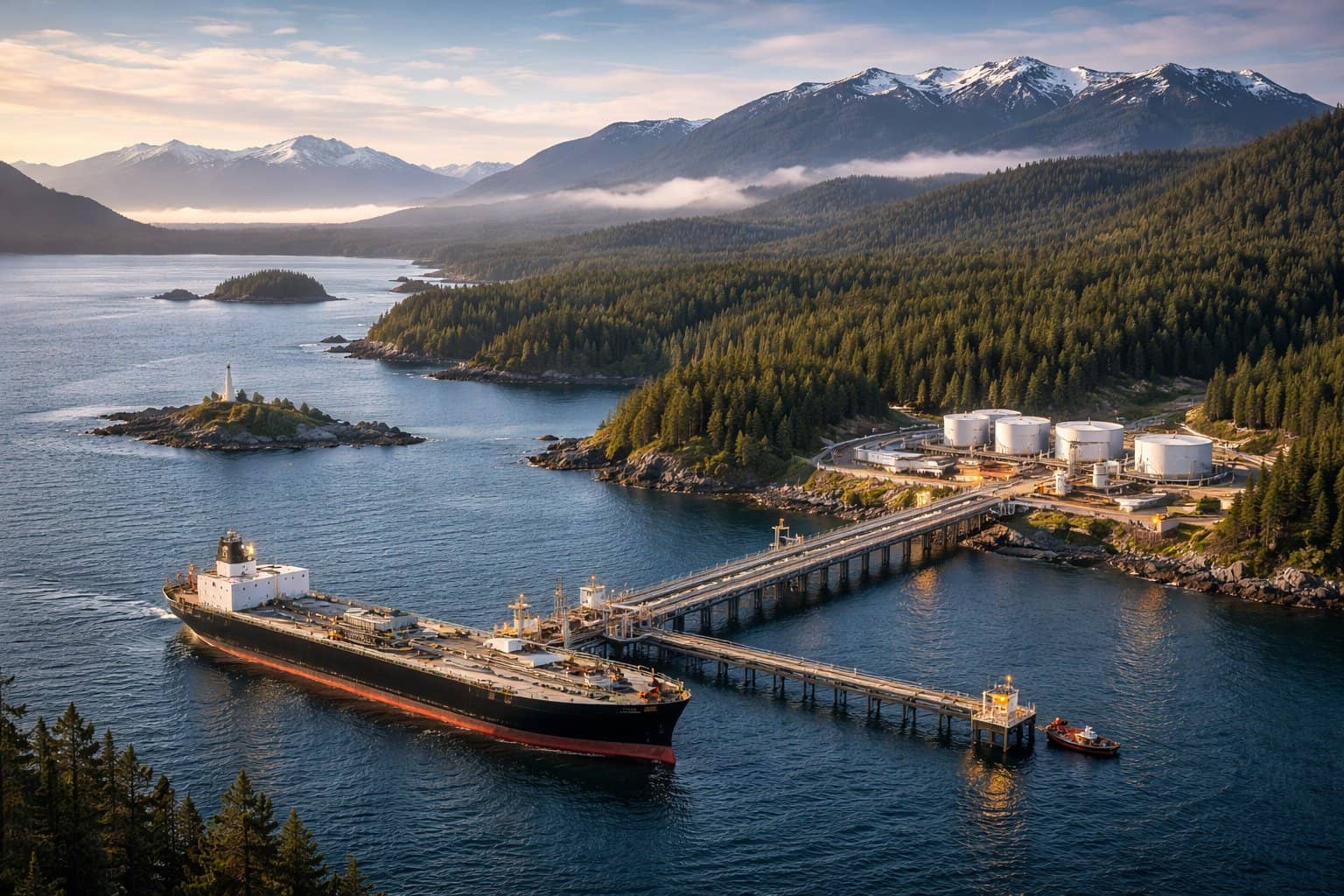
This announcement narrows the northwest options to Prince Rupert, which possesses the deepwater capacity required for Very Large Crude Carriers (VLCCs). However, the shift has only intensified the resolve of coastal leaders. Marilyn Slett, president of the CFN and Heiltsuk chief councillor, reiterated that “it would take just one spill to destroy our way of life,” maintaining that the group remains 100% opposed to any project that brings oil tankers to the North Coast.
Legitimacy and the “Advocacy Group” Label
On January 30, the CFN hit back against attempts by politicians to diminish their standing in the debate. Yuri Fulmer, a B.C. Conservative leadership candidate, recently labeled the CFN as “just an advocacy group” and “just a name, like Coke or Nike,” claiming the organization is funded by foreign interests.
Chief Slett dismissed these allegations as “disinformation and propaganda,” clarifying that while the CFN is a non-profit support organization (the Great Bear Initiative Society), its member nations are the undisputed governing bodies of the territories at risk.
“It’s an important distinction,” Slett told media. “CFN is not a governing body, but the member nations of CFN are the governing bodies of their territories, which stand to be impacted by this proposed pipeline”.
Geopolitical Pressures and Investment Climate
The debate is further complicated by a “national interest” push from Ottawa. Prime Minister Carney’s government has signaled that it may seek to lift or “appropriately adjust” the Oil Tanker Moratorium Act (Bill C-48) if the pipeline is deemed a national priority.
However, economists like Jack Mintz warn that the primary hurdle may not be political, but financial. Attracting the multibillion-dollar investment needed for a new pipeline is difficult in a climate of legal uncertainty. While some proponents suggest a “TMXX” expansion (expanding the Trans Mountain system to avoid the northern tanker ban), Prince Rupert remains the prize for industry due to its superior terminal capacity.
The Carney government continues to navigate the fine line of the UN Declaration on the Rights of Indigenous Peoples (UNDRIP), which mandates “free, prior and informed consent”. While the federal government views consent as a goal of meaningful consultation rather than a strict “veto,” the CFN’s vow to use “every legal tool” to stop the project suggests a long battle ahead in the courts.