




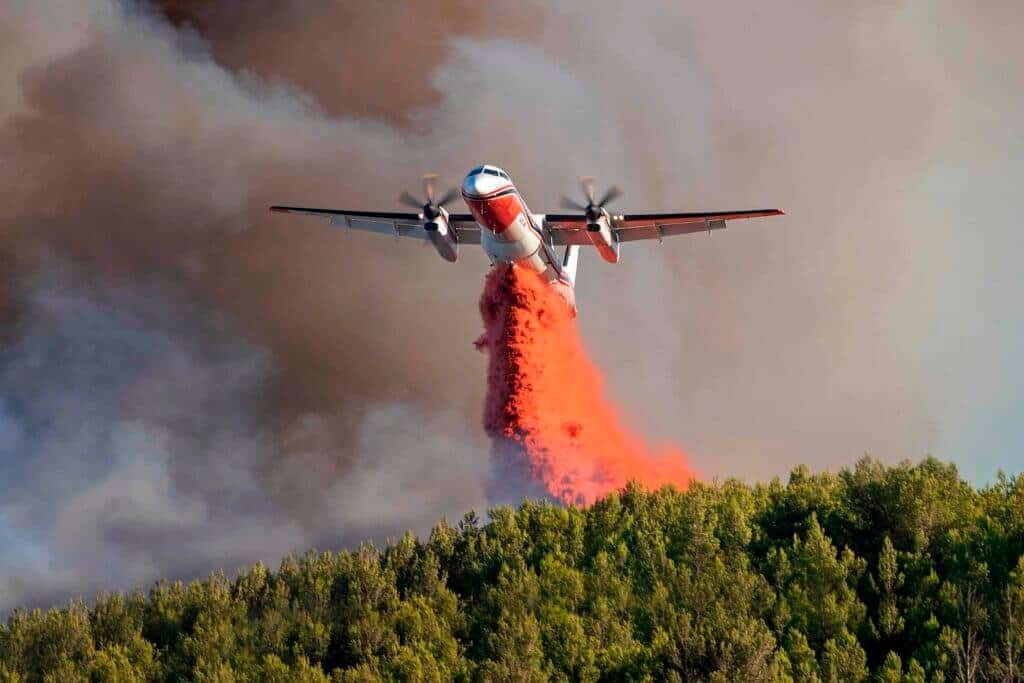
WINNIPEG, Manitoba – The Government of Canada has announced a major investment to bolster the country’s aerial firefighting capacity, committing $257.6 million over four years to lease firefighting aircraft, such as waterbombers, to better protect communities from increasingly severe wildfires.
The investment, highlighted by Parliamentary Secretary Anthony Housefather in Winnipeg today, is sourced from Budget 2025 and will be managed through Natural Resources Canada. The funding is a direct response to the devastating wildfire seasons Canada has faced, including 2025, which officials noted was the second worst wildfire season in the country’s history.
Strengthening National Resilience
Aerial firefighting plays a crucial role in protecting lives and property, slowing fire spread, and supporting ground crews in hard-to-reach areas. The leased aircraft will ensure Canadian wildland fire agencies have access to essential resources, enhancing the support provided to provinces and territories through the Canadian Interagency Forest Fire Centre (CIFFC).
Minister of Emergency Management and Community Resilience, Eleanor Olszewski, underscored the urgency of the investment. “We can not wait to strengthen our firefighting capabilities and this is exactly why we are making these investments in firefighting aircraft such as waterbombers. These aircraft will help us respond faster, slow the spread of fires, and minimize the impact of wildfires on communities across Canada,” she stated.
Minister of Energy and Natural Resources, Tim Hodgson, added that the investment will strengthen national wildfire resilience by allowing the federal government to provide provinces and territories with critical aerial capacity when they need it most.
Comprehensive Wildfire Strategy
This $257.6 million commitment complements a broader federal strategy that has seen nearly $1 billion committed since 2019 to strengthen Canada’s wildfire response capacity. Key components of this strategy include:
- Training: $284 million for the Fighting and Managing Wildfires in a Changing Climate (FMWCC) Program, which has already supported the training of more than 300 wildland firefighters and 700 structural firefighters.
- Equipment: $254.3 million under the FMWCC Equipment Fund to procure essential firefighting equipment, with agreements signed with every eligible province and territory.
- Innovation: $285 million for the Wildfire Resilient Future Initiative (WRFI), which includes the establishment of the Wildfire Resilience Consortium of Canada (WRCC) to bring together experts, Indigenous fire stewards, and governments to accelerate the use of cutting-edge science and technology.
- Satellite Monitoring: $169.9 million for WildFireSat, the world’s first government-owned satellite mission specifically designed to monitor active wildfires in Canada daily.
The WRCC will also advance actions outlined in the Kananaskis Wildfire Charter, which was agreed to by G7 leaders and endorsed by multiple international partners, demonstrating the global collaboration required to manage the escalating threat of severe wildfires.