






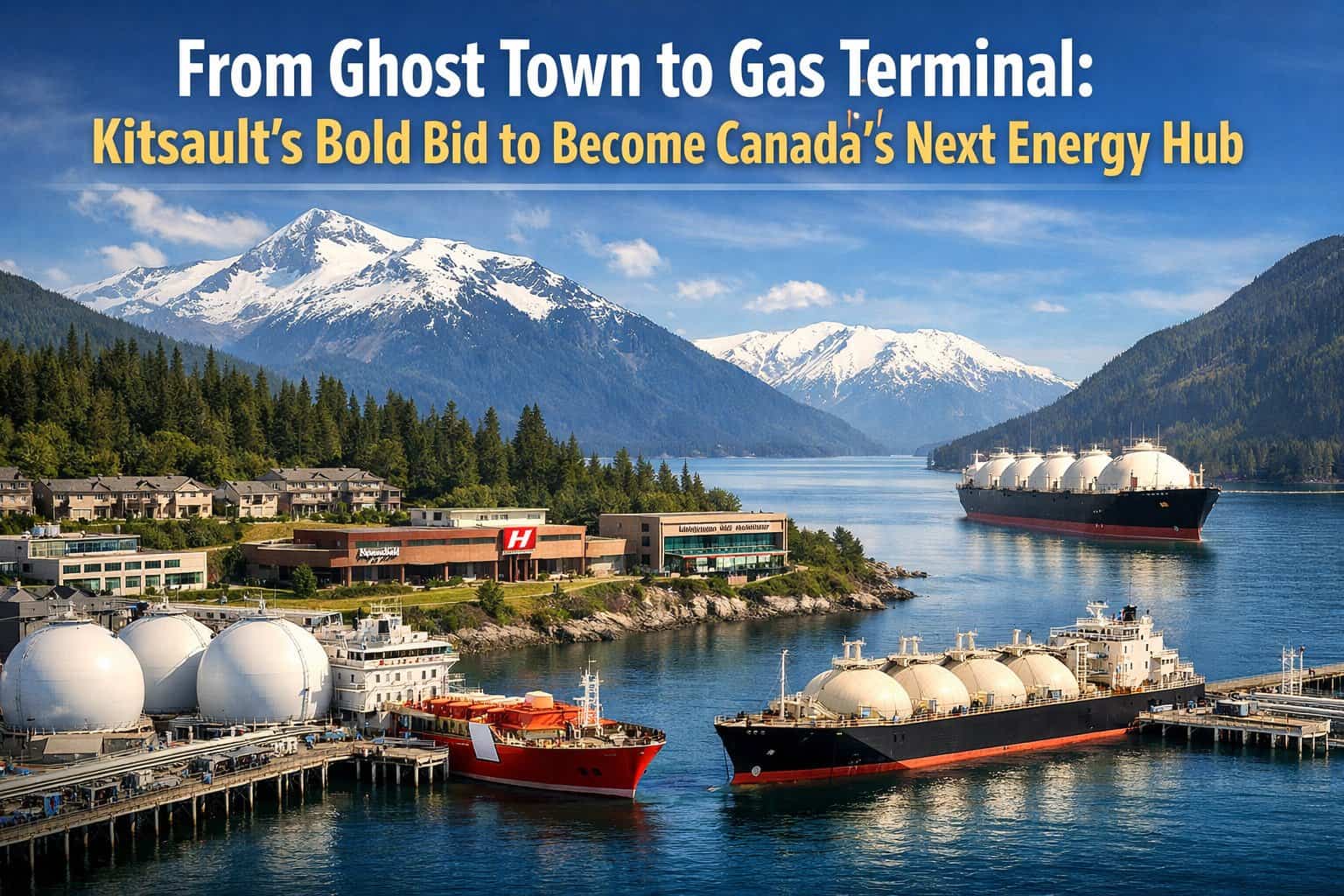
KITSAULT / PRINCE RUPERT — The weekend has brought renewed focus to one of the most unique real estate holdings in Northern B.C.: the “ghost town” of Kitsault. Located approximately 140 kilometers northeast of Prince Rupert, this uninhabited former mining community is at the center of an aggressive lobbying effort to become Canada’s next dedicated energy export terminal.
A Town “Frozen in Time”
Unlike competing greenfield sites that require billions in new housing and civic infrastructure, Kitsault offers a turnkey solution. Purchased by businessman Krishnan Suthanthiran in 2005, the town remains “frozen in a 1980s time warp,” meticulously maintained despite having no permanent residents.
Existing Infrastructure Includes:
- 92 Houses and 200 Apartments: Move-in ready residential units that could house a full operational workforce.
- Civic Facilities: A hospital, a shopping mall, a restaurant, and a bank.
- Recreation: A gymnasium, a swimming pool, and a library.
- Logistics: Deep-water access and existing utility connections.
Strategic Advantage vs. Conventional Logistics
Proponents of the Kitsault Energy Hub argue that the site’s existing footprint allows it to “move faster” than any other proposal in the region, bypassing the years of construction typically required for workforce housing.
However, the proposal faces skepticism from some logistical experts. Heather Exner-Pirot of the Macdonald-Laurier Institute suggests that Prince Rupert remains the more obvious choice for deep-water ports due to its established rail links and existing industrial momentum. Despite this, the sheltered waters of Alice Arm provide a unique geographic advantage for specialized energy carriers.
Geopolitical Context: The Pivot to Asia
The Kitsault proposal reflects a broader regional trend as Canada seeks to diversify its trade routes. Under the current geopolitical climate, there is an intensified effort to pivot away from a singular reliance on the United States market.
By establishing a dedicated hub at Kitsault, proponents believe Canada can more efficiently target Asian energy markets, providing a direct link for B.C. and Alberta natural gas to reach overseas customers from a site that is already built and waiting for a purpose.