




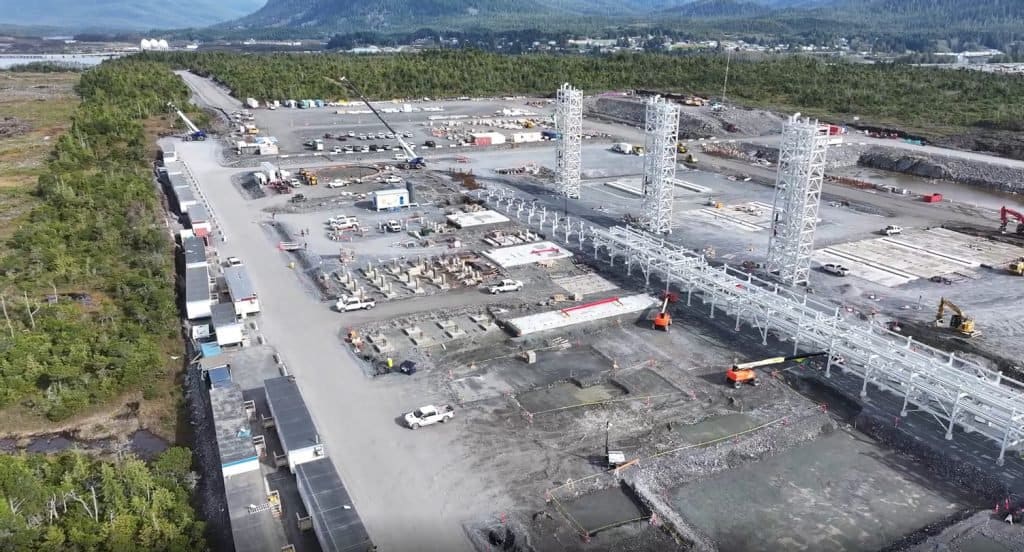
PRINCE RUPERT — In a move that has sent shockwaves through the Canadian energy sector, the Metlakatla First Nation officially withdrew its consent for the Ridley Island Energy Export Facility (REEF) on February 4, 2026. The Nation contends that its original support for the $1.35 billion project—a 50-50 joint venture between AltaGas and Royal Vopak—was “unlawfully obtained” due to the non-disclosure of a “secret monopoly agreement”.
The “Export Monopoly” Discovery
The Metlakatla’s withdrawal is predicated on the discovery of a 2015 exclusivity agreement between the Prince Rupert Port Authority (PRPA) and Vopak. According to the Nation, this agreement granted Vopak the power to arbitrarily veto competing energy projects in the port, effectively creating an export monopoly for liquefied petroleum gas (LPG).
The existence of this veto only came to light in 2023, when the PRPA rejected an application by Trigon Pacific Terminals to expand its own propane export capabilities. The Metlakatla, who hold a 10 percent equity stake in Trigon, argue that the PRPA and the REEF partners “conspired to keep this monopoly agreement secret” during the consultation process.
“Had Metlakatla known in 2015 that PRPA was prepared to grant Vopak exclusive export rights, we would have strongly opposed it,” stated Chief Robert Nelson. “If we had learned about the export monopoly during the REEF consultation process, we would not have consented to the project”.
Judicial Rulings: A Valid Cause for Action
The conflict reached a pivotal legal milestone on February 3, 2026, when B.C. Supreme Court Justice Edlyn Lauriedismissed an attempt by the PRPA to strike the Metlakatla’s lawsuit. The Port had characterized the claim as a “collateral attack” on federal approvals, arguing it belonged in Federal Court.
Justice Laurie rejected this characterization, ruling that the Nation’s claims for negligent misrepresentation and breach of fiduciary duty were reasonable causes of action. While the court struck down a request to force new consultations, it validated the pursuit of financial compensation for the “lessened value” of the Nation’s interest in Trigon and the alleged violation of their constitutionally protected rights.
Economic Stakes and Investment Climate
The industrial reaction has been one of extreme concern. AltaGas executives stated that the retroactive withdrawal of consent is “not factually or legally accurate” and warns it could “fundamentally undermine the rule of law” in Canada. They argue that long-term capital depends on the stability of regulatory approvals once granted.
The “Monopoly” Barrier Impact:
- Stalled Investment: Chief Nelson claims that ending the exclusivity could immediately unlock over $2 billion in new private-sector investment.
- Upstream Friction: At least two upstream energy projects in B.C. and Alberta are reportedly frustrated because they cannot access tidewater through the port due to the veto.
- Market Access: Canadian producers are currently forced to sell propane at a discount in U.S. markets because the “monopoly” limits access to premium Asia-Pacific customers.
The Metlakatla have now notified federal and provincial regulators of their withdrawal and vow to oppose all future permits required for REEF’s operation or expansion. The REEF project remains under construction and is currently scheduled to be operational by Q4 2026.