





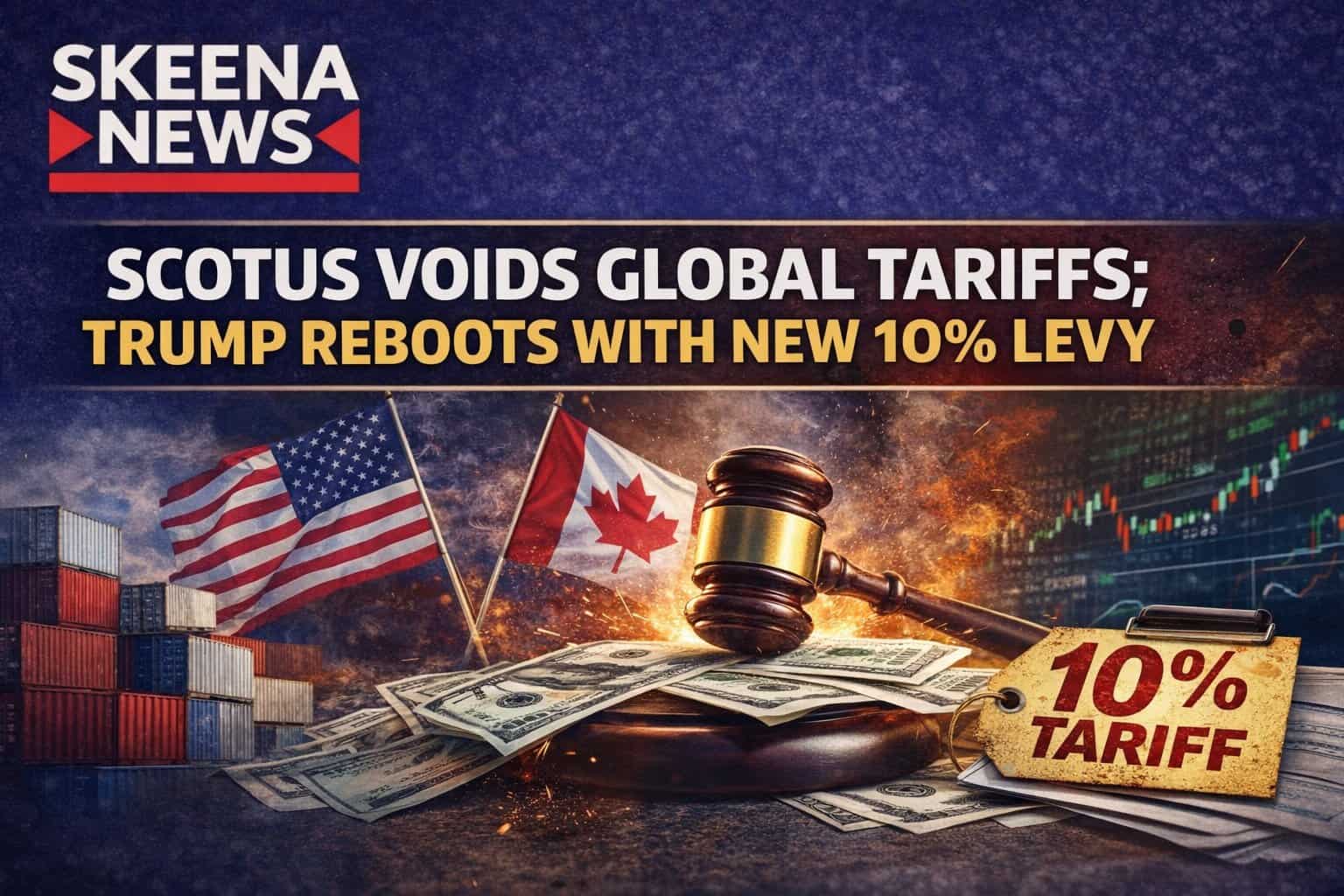
WASHINGTON / OTTAWA — The global trading system faced a historic turning point on the morning of February 20, 2026, as the United States Supreme Court delivered a landmark ruling in Learning Resources, Inc. v. Trump. In a 6-3 decision, the court struck down the sweeping global tariffs previously imposed by the Trump administration under the International Emergency Economic Powers Act (IEEPA).
The 170-page opinion clarified that the U.S. Constitution grants Congress clear authority over taxes and tariffs, ruling that the executive branch exceeded its mandate by using emergency powers to enact what were dubbed “Liberation Day” tariffs.
The Tactical Shift: From IEEPA to Section 122
The legal victory for Canadian and international exporters was short-lived. Hours after the ruling, President Donald Trump labeled the decision a “disgrace” and signed a new executive order implementing a 10 per cent global tariff under Section 122 of the Trade Act of 1974.
This mechanism allows for a temporary 150-day duty to address balance-of-payments deficits. While the new 10 per cent levy is a reduction from the previous 25 per cent duties, it introduces fresh market uncertainty.
Current Tariff Status (as of Feb 20, 2026)
| Tariff Provision | Legal Status | Impact for Canada |
| IEEPA Global Tariffs | Struck Down (SCOTUS) | Potential for US$164.7B in global refunds |
| Section 122 New Levy | Active (10%) | 150-day duration; affects non-CUSMA goods |
| Section 232 Duties | Active | Persistent harm to steel and aluminum |
| Softwood Lumber | Active | Subject to separate legal challenges |
Canadian Reaction – Relief Tempered by Caution
The news triggered a “climbing a wall of worry” rally on the S&P/TSX composite index, which closed up 222.53 points at 33,817.51, buoyed by technology stocks.
In Ottawa, Prime Minister Mark Carney and Trade Minister Dominic LeBlanc stated the ruling reinforced that the previous tariffs were “unjustified”. In British Columbia, Premier David Eby welcomed the “Liberation Day” ruling but noted it provides little relief for the softwood lumber sector. Federal Conservative Leader Pierre Poilievre called the ruling a “step in the right direction” but reminded the public that sectoral tariffs on steel and aluminum remain a major hurdle for Canadian workers.