






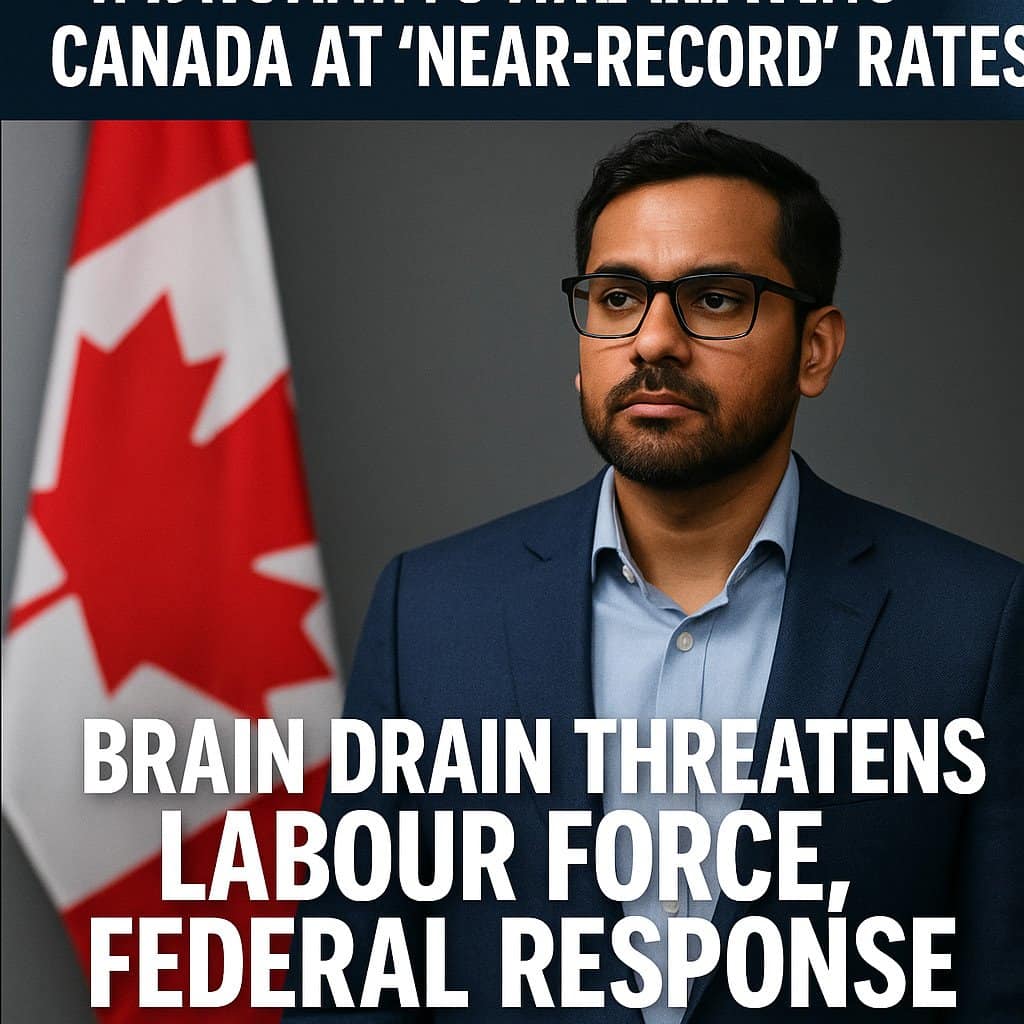
The economic prosperity and future labour needs of Canada are at risk, as a new report suggests immigrants are leaving the country at “near-record rates,” with highly educated and skilled newcomers leading the exodus.
A joint report by the Institute of Canadian Citizenship (ICC) and the Conference Board of Canada found that highly skilled immigrants are leaving Canada at twice the rate of those with less education and lower skills. This trend is known as onward migration.
The report quantified the risk, noting that in all, one in five migrants ends up leaving Canada within the first 25 years, with the likelihood of departure peaking within the first five years. The risk accelerates with education: immigrants with doctorates, for example, are nearly twice as likely to leave Canada within five years compared to those with a bachelor’s degree.
Direct Threat to Northern B.C. Key Sectors
This “brain drain” poses a critical threat to Northern B.C., which relies on attracting specialized talent to fill essential roles in healthcare, resource management, and technology.
The report found that some of the next decade’s most “in-demand” occupations are among those seeing the highest likelihood of immigrants leaving within 25 years. These fields include:
- Health care (a sector already facing acute personnel shortages across the North).
- Engineering and architecture management.
- Information and communications technology (ICT).
- Business and finance management.
The primary driver for this mass departure is economics: declining or stagnating incomes. The report found that high-skilled immigrants—such as engineers, health care professionals, and scientists—are disproportionately motivated to leave when faced with no income growth.
Federal Response to the Credential Crisis
The findings come as the federal government attempts to balance sustainable immigration levels with the immediate labour needs of key sectors.
Immigration Minister Lena Diab testified before a House of Commons committee, acknowledging the barriers to retaining skilled workers. The Minister pointed to the $97 million Foreign Credential Recognition Action Fund, which was allocated in this year’s federal budget over five years. This fund is aimed at helping foreign-trained health care professionals gain faster recognition in Canada.
“Our new international talent attraction strategy builds on these efforts, positioning Canada to meet strategic labor market needs and helping employers recruit high-skilled workers faster in sectors like health care, construction, emerging technology, artificial intelligence,” Diab said.
While the government seeks to “harmonize” the credentials recognition program, the report strongly suggests that unless salaries and economic opportunities for these professionals improve significantly, efforts to streamline entry may be undermined by the failure to retain them.