





Coastal First Nations pipeline opposition
PRINCE RUPERT – The Coastal First Nations (CFN) alliance has sent a clear message to Ottawa: their coast is not for sale, and their opposition to a bitumen pipeline remains unshakable.
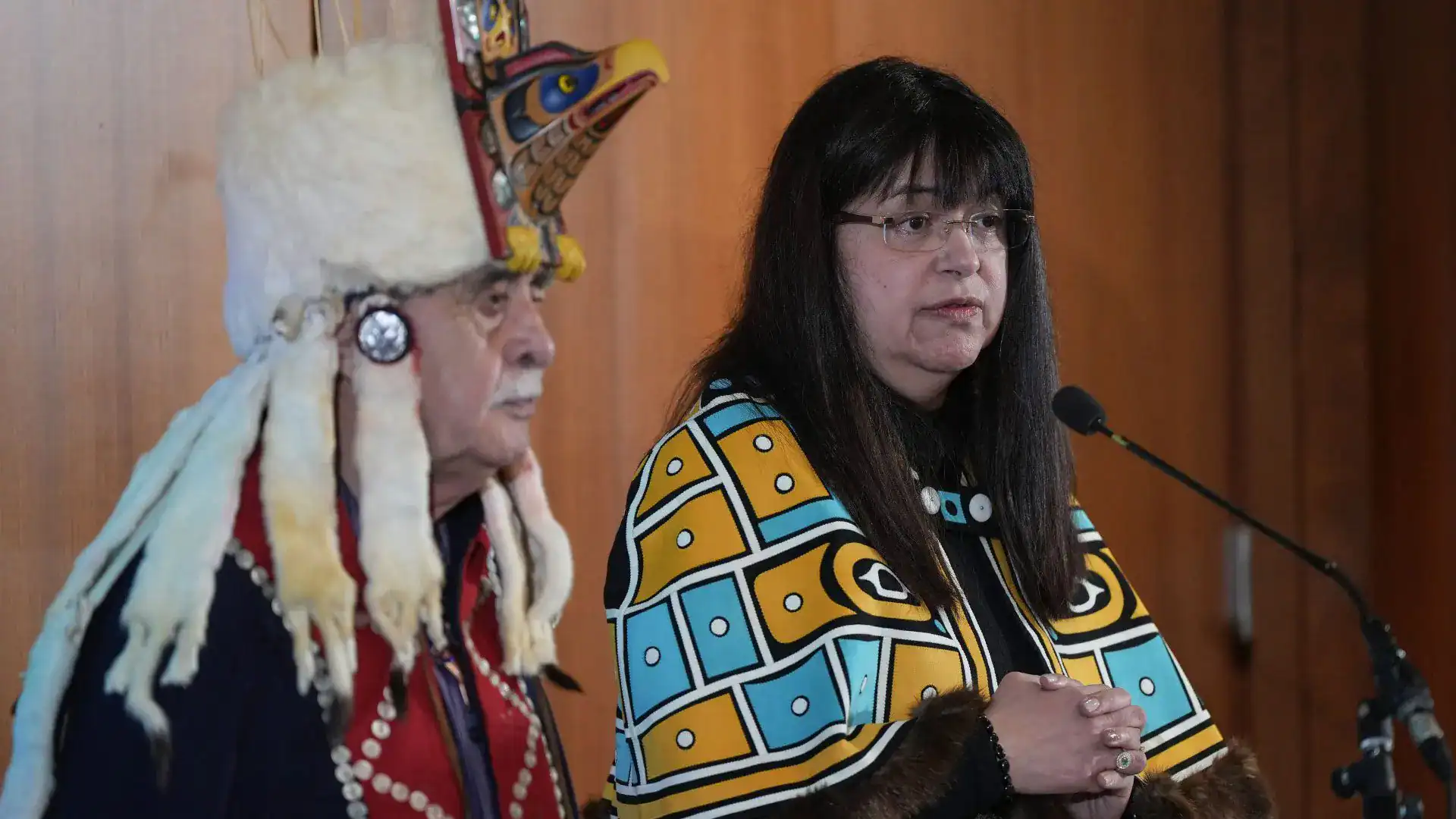
Following a high-stakes meeting with Prime Minister Mark Carney in Prince Rupert on Tuesday morning, Indigenous leaders held a press conference at the Crest Hotel to debrief the public on a discussion that touched on reconciliation, economic development, and the environmental sanctity of the North Coast.
Marilyn Slett, President of the Coastal First Nations, told reporters that while the dialogue was productive, the alliance’s stance on oil transportation has not budged.
“We made our positions very clear and reiterated those positions around our stance regarding the oil pipeline, and that has not changed,” Slett said.
Slett emphasized the catastrophic risk a single oil spill would pose to the region’s delicate ecosystem and the Indigenous way of life. She called on the Prime Minister to maintain and support the existing oil tanker moratorium—a federal policy the alliance intends to defend with “every tool in their toolbox.”
A Shift from ‘Transactional’ to ‘Reconciliation’ Prime Minister Carney reportedly assured the alliance that the federal government would seek free, prior, and informed consent (FPIC) for any future projects within their territories. Both parties have agreed to co-develop a transparent process for future engagement.
Gaagwiis (Jason Alsop), Vice President of the Coastal First Nations, described the meeting as a positive step toward a “reconciliation journey” rather than a “transactional relationship.” He noted that the discussion moved beyond simple buy-outs, focusing instead on the long-term responsibility of stewardship.
“Our interest isn’t about money in this situation—it’s about the responsibility of looking after our territories and nurturing the sustainable economies that we currently live in,” Alsop said.
Managing the ‘Cumulative Effect’ While the pipeline remains a point of contention, the leaders did discuss other “nation-building” priorities and existing industrial proposals in Prince Rupert and across Northern B.C. Alsop noted that the projected increase in shipping traffic requires careful management to mitigate coastal erosion and habitat loss.
“The cumulative effect, coastal erosion, impacts on species and habitat, our communities, and our culture are all factored into how we’re analyzing this,” Alsop added.
Ottawa’s Commitment Prime Minister Carney did not attend the post-meeting press conference, as he prepared to depart for a landmark diplomatic mission to China—the first visit by a Canadian PM in nearly a decade.
However, the Prime Minister’s Office (PMO) issued a statement confirming a commitment to renew funding for the Oceans Protection Plan Reconciliation Framework Agreement for the 2026-27 period. The PMO also reaffirmed Canada’s goal to conserve 30 percent of its land and waters by 2030.
“Their discussions focused on how the federal government and the Coastal First Nations can work in partnership to strengthen marine conservation and ocean protection, and to build a strong and sustainable economy,” the PMO stated.
For the people of the Skeena and the North Coast, the meeting marks a pivotal moment in the region’s ongoing tension between industrial pressure and environmental preservation. While the federal government speaks of partnership, the Coastal First Nations have made it clear that partnership does not equal a green light for bitumen.