





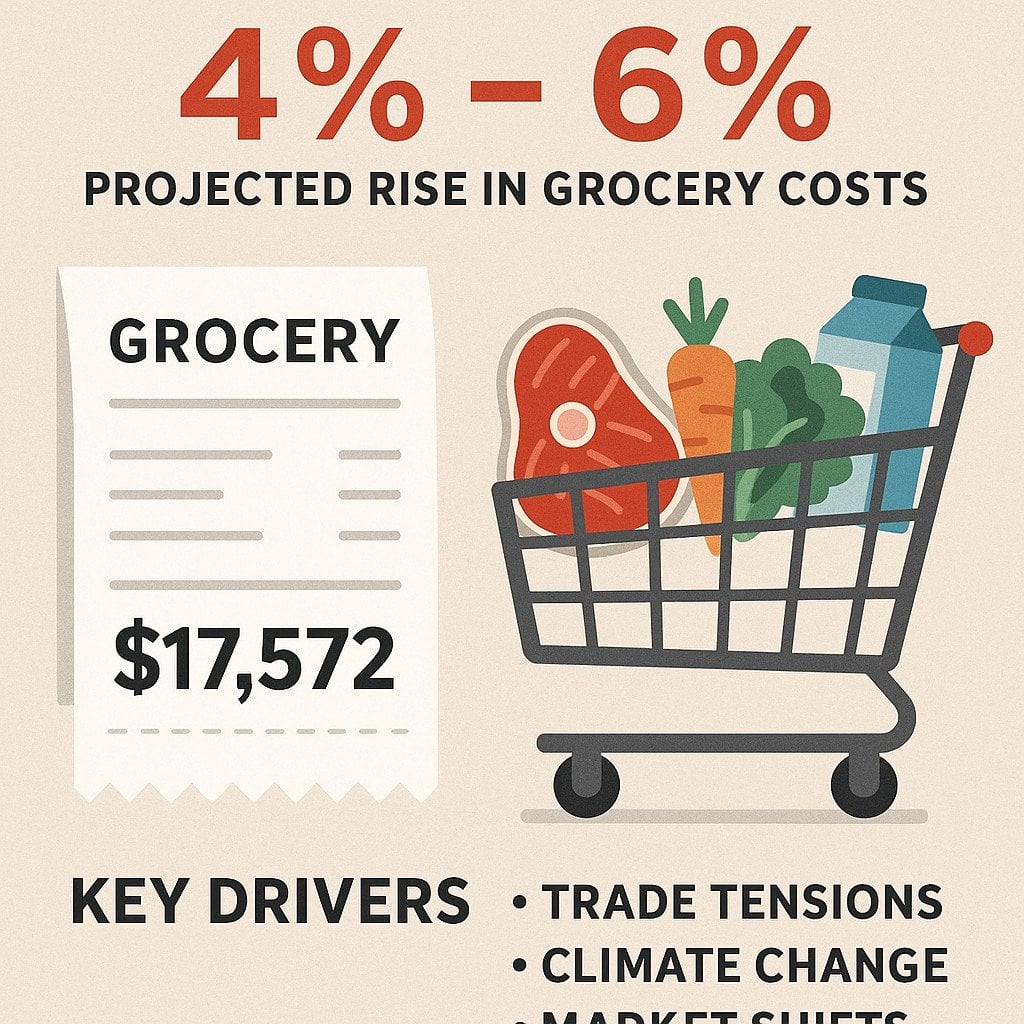
Terrace, B.C. CANADIANS will soon face another tough bill at the grocery store. The annual 2026 Food Price Report forecasts that the cost of food will increase by anywhere between four and six per cent next year, continuing a significant trend of rising costs.
According to Dr. Sylvain Charlebois, the report’s lead author and a food researcher at Dalhousie University, an average family of four in Canada can expect their food bill to go up by as much as $994 for 2026. This means a family of four will fork out an estimated $17,571.79 on food in 2026.
These 2026 projections follow a trend of relentless food price inflation, with an overall 27 per cent increase over the past five years.
Key Drivers of the Price Hike
Several factors are converging to drive food prices upward in 2026:
- Trade Tensions: The ongoing trade dispute with the United States continues to create uncertainty, inflationary impacts from tariffs, and supply chain disruptions.
- Climate Change: Extreme weather is profoundly affecting agricultural yields and livestock costs.
- Market Shifts: Changes in food manufacturing and retail landscapes, labour markets, policy adjustments, and the Canadian dollar outlook are also contributing.
There is some hope for relief, however, as the report notes that Canada’s removal of almost all counter-tariffs on U.S. imports should help ease upward inflationary pressures on goods.
What’s Getting More Expensive?
When it comes to specific food categories, meat is projected to see the biggest hikes:
- Beef: The top concern is beef, which Dr. Charlebois attributes primarily to climate change. Persistent drought has raised feeding costs, leading ranchers to sell off herds without replenishing them, resulting in low inventory in both Canada and the U.S.. This is why more Australian and New Zealand beef is being imported.
- Chicken: Prices are also expected to be under pressure due to underproduction, a factor worsened by avian flu outbreaks.
- Coffee: Coffee is becoming extremely expensive and is expected to continue rising in 2026. Climate change is making it difficult to provide Arabica beans due to weather patterns impacting yields globally.
- Restaurants: Restaurant prices are also expected to rise. This is partly due to potential widespread closures (less competition) and the fact that people are drinking less alcohol, which is a “big money maker for the food service industry.” Restaurants will likely revise menu prices to compensate.
Where Prices May Remain Stable
Consumers looking to manage costs may find better luck in certain aisles:
- Produce: Prices are “not bad” in the produce section.
- Frozen Aisle: After increasing in 2025, prices are expected to be stable there.
- Dairy and Bakery: Prices in these categories are not expected to “explode”.

