





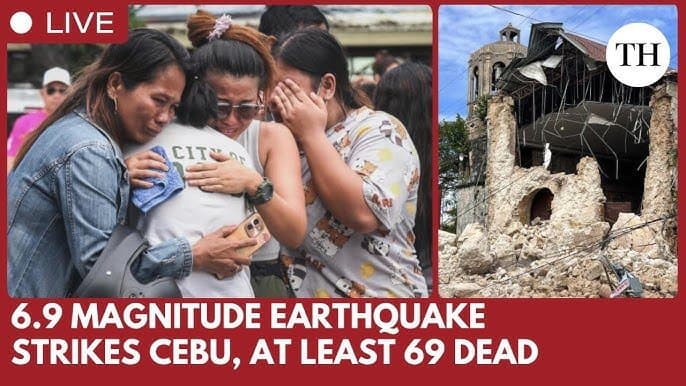
SKEENA REGION – A catastrophic 6.9 magnitude earthquake that struck the Central Philippines earlier this week has sent a wave of acute anxiety and financial strain through the Filipino-Canadian community of Northern British Columbia.
The quake, which hit late Tuesday evening (Sept. 30, 2025) near Bogo City in Cebu Province, has resulted in at least 69 verified fatalities and over 200 injuries. The extremely shallow depth of the tremor, estimated at only 5 kilometers, caused widespread structural collapse and immediate failure of critical lifelines, including power and clean water systems. The severity of the crisis is compounded by the fact that the quake struck an area already reeling from a recent, severe storm.
For the Skeena region, which is home to a robust and organized Filipino community, the tragedy is deeply personal. Given the heavy concentration of casualties in northern Cebu, it is highly probable that many local residents have immediate family members residing in or near the directly affected locations. This puts severe, immediate financial stress on local families as they prioritize urgent remittances to support relatives facing the sudden loss of shelter and livelihood.
The Urgent Humanitarian Need
The shallow focus of the seismic energy resulted in widespread destruction, particularly in the northern municipalities of Cebu, including Bogo City, San Remigio, and Medellin. Rescue and relief efforts are significantly hindered by logistical bottlenecks, including damaged roads, sporadic heavy rain, and persistent aftershocks.
The International Federation of Red Cross and Red Crescent Societies (IFRC) has launched an international emergency appeal for CHF 8 million to support the Philippine Red Cross in providing basic survival necessities:
- Food and Clean Water
- Temporary Shelter (tents, tarpaulins)
- Medical and Psychosocial Support
Local Response and Call for Verified Support
Local networks, including registered organizations like the Mabuhay House Society, provide the necessary infrastructure for community mobilization. The Filipino community in Canada has a proven history of rapid, effective fundraising capacity in response to past homeland disasters.
Skeena News stresses the importance of using verified channels to ensure donations are directed securely and efficiently. Community members wishing to donate should prioritize campaigns channeled through established, registered entities, such as the IFRC appeal or registered local Filipino-Canadian societies with proven financial accountability. These diaspora remittances serve as critical “bridging aid” in the crucial hours of the crisis.
Authorities expect the casualty figure to continue rising as rescue operations progress. The Canadian government has issued a travel advisory urging extreme caution for citizens currently in the Philippines, emphasizing the need to monitor local media and adhere to all evacuation orders.

