






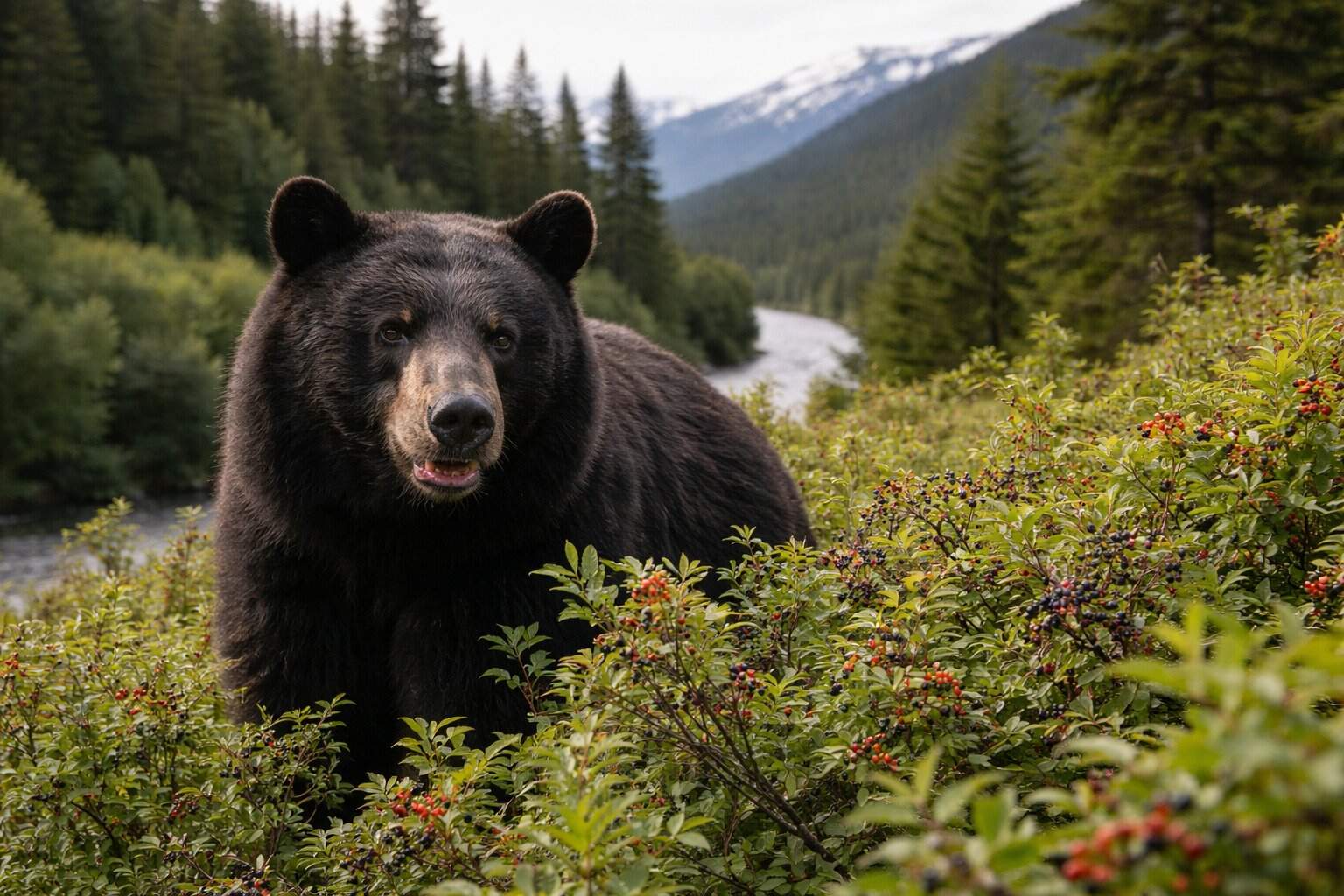
TERRACE — The management of the region’s natural capital remains a top priority as industrial development expands, but new data suggests that Skeena’s bears are finding it easier to stay “wild” this year. Reports released by the B.C. Conservation Officer Service (BCCOS) on January 28, 2026, reveal a dramatic downward trend in human-wildlife conflicts across the province and the Northwest.
According to the 2025 calendar year statistics, British Columbia saw the lowest number of black bears destroyed by officers in over a decade. Province-wide, only 211 black bears were killed—a staggering 65% drop from the record highs seen in 2023.
Regional Breakdown: Skeena in the Top Three
While the provincial numbers are at historic lows, the Skeena region remains a high-activity zone for human-bear interactions. With 29 bears killed in 2025, the region saw the third-highest total in B.C., surpassed only by the West Coast and South Coast.
2025 Black Bear Management Statistics by Region
| Region | Total Bears Killed | Status (Dispatched / Euthanized) |
| West Coast | 49 | 47 Dispatched / 2 Euthanized |
| South Coast | 35 | 31 Dispatched / 4 Euthanized |
| Skeena | 29 | 25 Dispatched / 4 Euthanized |
| Kootenays | 25 | 21 Dispatched / 4 Euthanized |
| Okanagan | 24 | 16 Dispatched / 8 Euthanized |
| Province Wide | 211 | 178 Dispatched / 33 Euthanized |
Note: “Dispatched” refers to bears killed for public safety/conflict; “Euthanized” refers to welfare cases such as vehicle injuries.
The “Berry Factor” and Community Action
Provincial large carnivore specialist Garth Mowat noted that a “phenomenal berry crop” across the B.C. Interior in 2025 was a primary driver for the low conflict rates. Abundant natural food sources like huckleberries kept bears in the high country and away from municipal garbage.
However, BCCOS Chief Cam Schley emphasized that the trend is also a direct result of community education. Call volumes to the Report All Poachers and Polluters (RAPP) line plummeted to 13,672 in 2025, down from nearly 28,000 the previous year.
Attractant Management: A Cultural Shift
In the Skeena, communities like Terrace (5 bears killed) and Smithers (3 bears killed) are increasingly adopting “Bear Smart” bylaws to secure attractants. Conservation officers continue to stress that garbage remains the number one cause of bear habituation in the North.
“Every community that adopts a strong bylaw sees a reduction in conflicts,” noted Inspector Drew Milne, citing municipalities like Tofino—which saw zero bears killed in 2025 after implementing a strict wildlife attractant bylaw—as a blueprint for northern towns.