






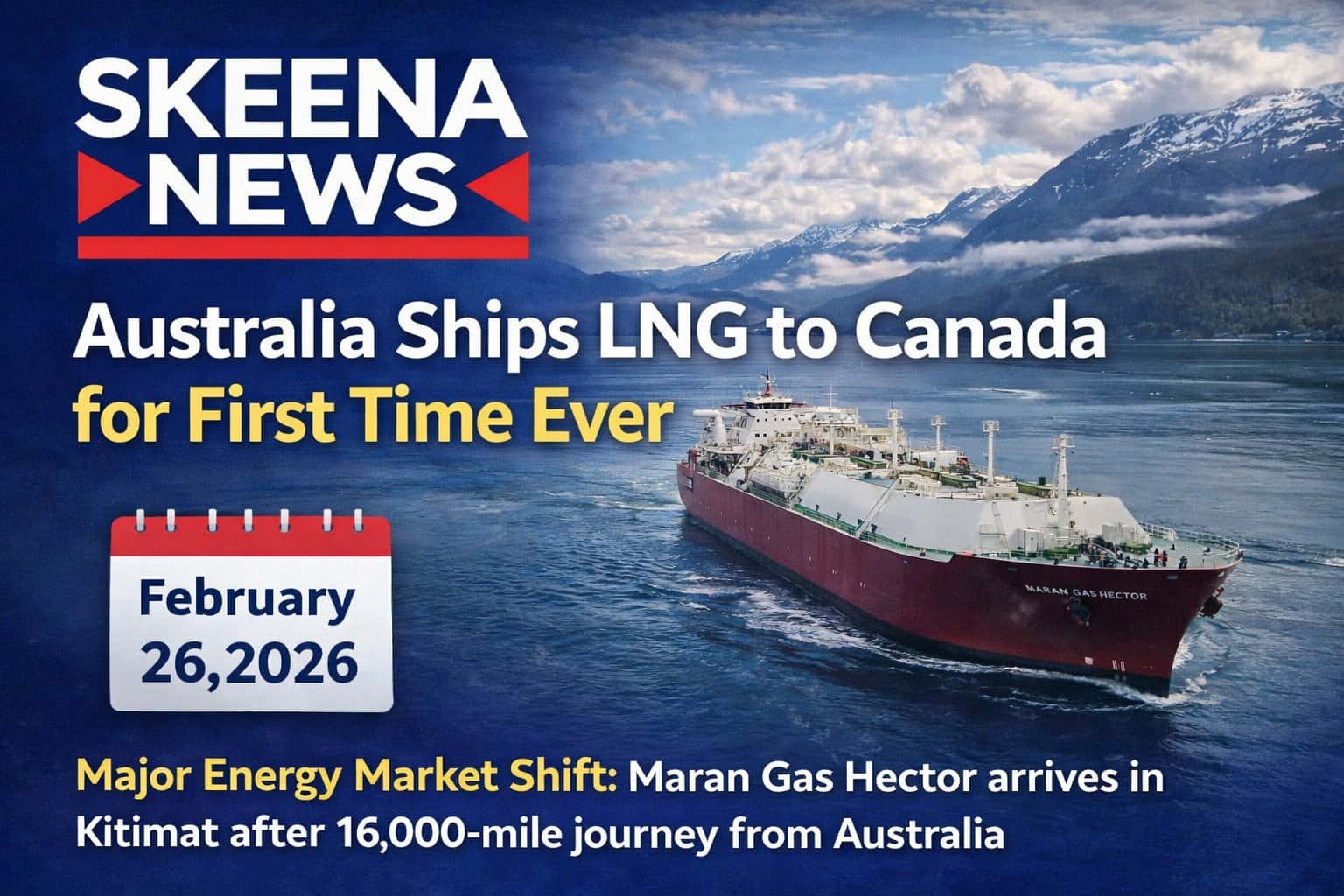
VANCOUVER / KITIMAT — In a development that has captured the attention of regional energy analysts, the global LNG supply chain witnessed a historic shift this week as Australia dispatched its first-ever shipment of liquefied natural gas (LNG) to Canadian shores.
The tanker Maran Gas Hector is scheduled to reach its destination today, February 26, 2026, completing an arduous 16,000-mile journey across the Pacific.
A Dramatic Market Realignment
For decades, the energy narrative in the Pacific has been one-way: exporters like Australia and Qatar feeding the insatiable demand of Asian economies. However, this week’s arrival signifies a major realignment driven by two key factors:
- Softened Asian Demand: A slowdown in traditional Asian markets has left Australian producers looking for alternative buyers in the West.
- Strategic Supply Chains: The shipment represents a “rare development” where the West, typically a net producer of natural gas, is leveraging global spot markets to bolster domestic supply during a volatile energy transition.
The Backdrop for B.C. Energy Projects
The arrival of the Maran Gas Hector serves as a critical—and somewhat ironic—backdrop for major projects currently under development in the Skeena region. Projects such as LNG Canada in Kitimat and Cedar LNG are designed specifically to do the exact opposite: export abundant Canadian natural gas westward to Asia.
Local experts analyzed the shipment on February 25, noting that while Canada is importing gas today, the completion of the Coastal GasLink pipeline and the terminal facilities in Kitimat will soon position the Northwest as a primary competitor to Australia.
LNG Logistics – Maran Gas Hector Profile
| Metric | Details |
| Vessel Name | Maran Gas Hector |
| Origin | Australia |
| Arrival Date | February 26, 2026 |
| Distance Traveled | ~16,000 miles |
| Market Significance | First-ever Australian-to-Canada LNG delivery |
Economic Implications for the Northwest
While this single shipment does not indicate a long-term dependence on Australian gas, it highlights the increasing “fluidity” of the global energy market. For residents of the Skeena region, it underscores the urgency of completing local export infrastructure to ensure that Northern B.C. remains an energy leader rather than a consumer of imported fuel.
As the Maran Gas Hector docks, it serves as a reminder that in the global energy game, the direction of the flow can change as fast as the market dictates.