





KITIMAT — A clear signal of the transition from the construction “boom” to the long-term operational phase of the LNG sector emerged on March 9, 2026. Edmonton-based Civeo, a major provider of worker accommodations, has filed a formal application with the District of Kitimat to significantly scale back its Sitka Lodge facility.
The proposal reflects a broader regional trend of labor normalization, as the massive transient construction workforce is slowly replaced by a smaller, permanent operational staff.
The Downsizing Strategy
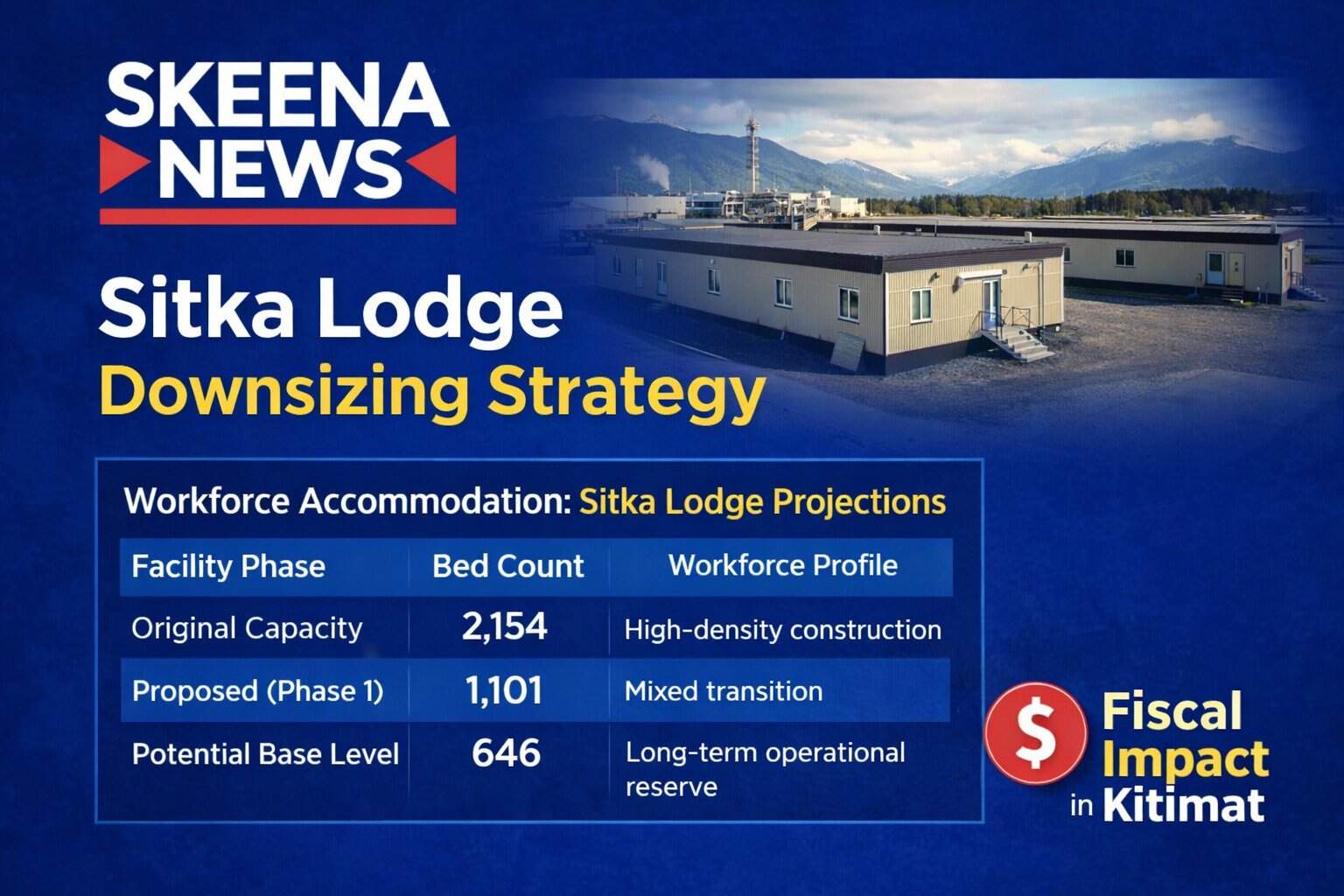
Civeo is seeking to reduce the capacity of Sitka Lodge in phases. The facility, which once bustled with over 2,000 workers, will now be tailored to meet the steady-state needs of regional industry.
Workforce Accommodation – Sitka Lodge Projections
| Facility Phase | Bed Count | Workforce Profile |
| Original Capacity | 2,154 | High-density construction |
| Proposed (Phase 1) | 1,101 | Mixed transition |
| Potential Base Level | 646 | Long-term operational reserve |
Fiscal Ripples for the District of Kitimat
The reduction in camp beds carries direct implications for the District’s municipal coffers. Under current bylaws, the District of Kitimat relies on a $500-per-bed levy specifically earmarked for its affordable housing fund.
However, this levy is only triggered when the total bed count at a facility exceeds 360. While Civeo’s proposed 1,101 beds will still generate significant revenue for the fund, the potential drop to a base level of 646 beds represents a sharp decline in the annual contributions the District has enjoyed during the peak construction years.
The “Recalibration” Challenge
The shift highlights a secondary challenge for Kitimat: as transient camps shrink, the pressure on the local housing market remains high. High-wage permanent workers for LNG Canada and its ancillary industries are increasingly seeking local residential housing, which continues to impact affordability for non-industrial residents.
The District has recently utilized its housing fund to support initiatives like the Tamitik Status of Women’s Day Shelter, but a dwindling bed-levy revenue base may require a recalibration of how future social projects are funded.