




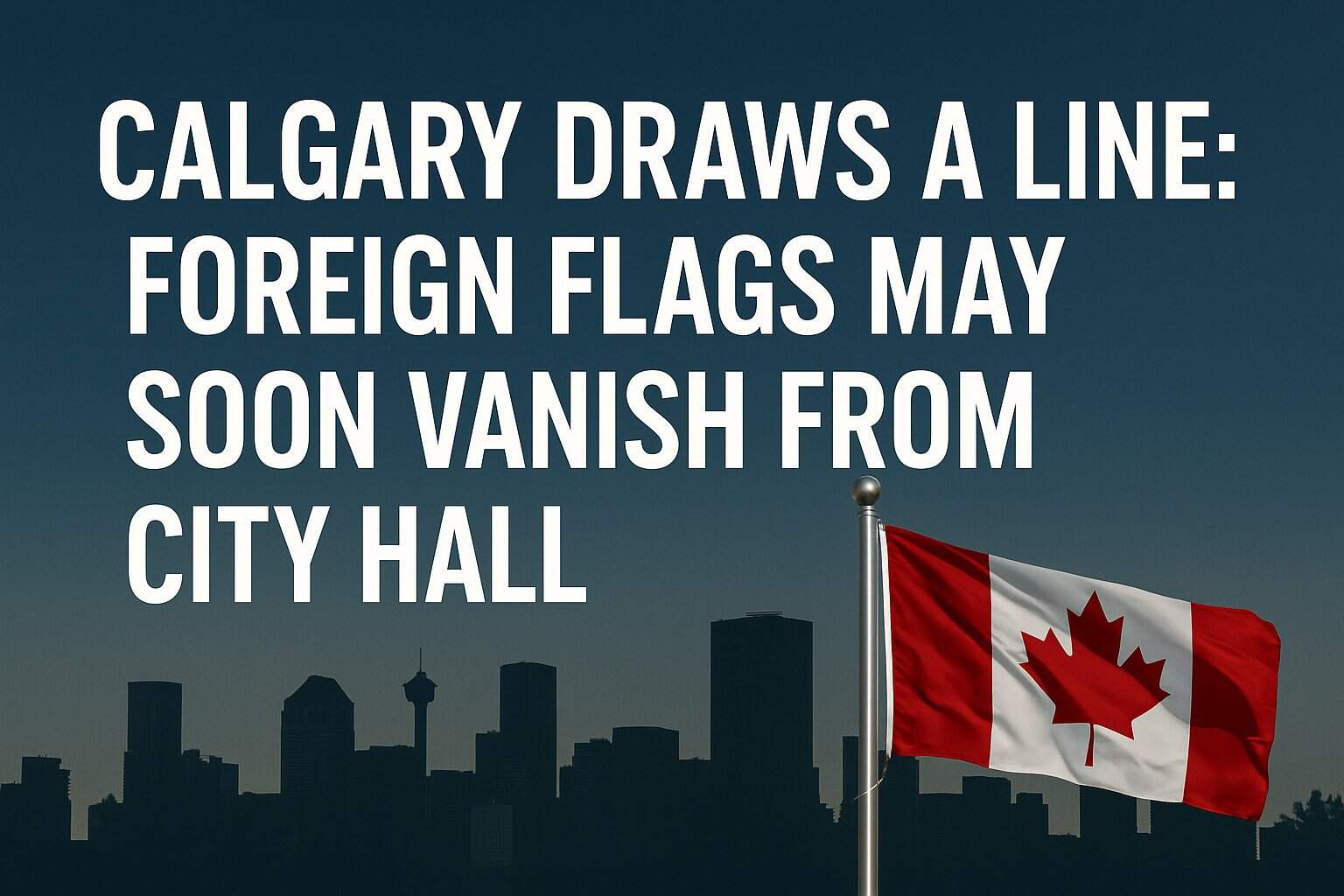
TERRACE, B.C. – The City of Calgary has become the epicenter of a national debate on public symbolism after its newly elected administration moved to ban the raising of all foreign national flags at City Hall. The policy shift, driven by concerns over geopolitical tensions spilling into local governance, is setting a strong precedent for municipalities across Canada, including those in Northern B.C.
Mayor Jeromy Farkas, who secured office in the recent October election, introduced an urgent motion to amend the city’s Flag Policy, asserting that City Hall must remain a singular, unifying, and safe space, untainted by international disputes.
The Structural Flaw in Civic Policy
The controversy was sparked when the previous city council approved a request to fly the Palestinian flag, a decision enabled by a policy that linked municipal flag displays to federal diplomatic recognition. Mayor Farkas argues this structural flaw ceded control of civic symbolism to Ottawa’s foreign affairs decisions, resulting in the immediate importation of geopolitical conflict.
The rationale for the ban is rooted in conflict mitigation:
- Unity over Division: National flags, especially during times of global conflict, risk creating division, escalating emotions, and making some residents feel unsafe.
- Public Safety: The administration cited the potential for flag-raising ceremonies to become “flashpoints for conflict,” draining limited police and administrative resources.
- Civic Neutrality: The policy is an attempt to recover local sovereignty over the public square, asserting that the Canadian flag, alongside provincial and municipal banners, is the only legitimate national representation within the civic sphere.
A Growing National Trend
Calgary’s move is not an anomaly; it solidifies a trend toward restrictive municipal vexillology:
- The Regina Precedent: Calgary explicitly cited Regina City Council, which adopted a similar restrictive policy earlier in 2025. Regina’s policy permanently reserves the ceremonial flagpole for core constitutional, provincial, municipal, and Treaty flags.
- The Toronto Contrast: The contrasting situation in Toronto, where a similar flag controversy resulted in a legal challenge, highlights the operational fragility of the older, permissive model. The legal and security burdens faced by Toronto provide a strong administrative incentive for cities like Calgary to adopt a non-discretionary, restrictive framework.
The proposed policy applies equally to all countries, removing the administrative burden of vetting requests or taking sides in international disputes. However, this commitment to institutional neutrality sacrifices long-standing celebrations of multicultural heritage, such as the peaceful raising of the Israeli flag on Yom Ha’atzmaut.
Implications for Northern B.C.
For municipalities in the Skeena region, the Calgary model presents a relevant case study in pragmatic resource conservation. Smaller, remote communities operate with limited police and administrative resources. Adopting a restrictive policy offers distinct operational advantages by simplifying governance and avoiding the high administrative cost of managing a single, highly contentious event.
This policy shift asserts that while local community-based identity—including Treaty flags and social causes—remains valued and celebrated, political expression linked to foreign national governments must be confined to private spaces to prioritize the collective Canadian civic identity in the official public sphere.