





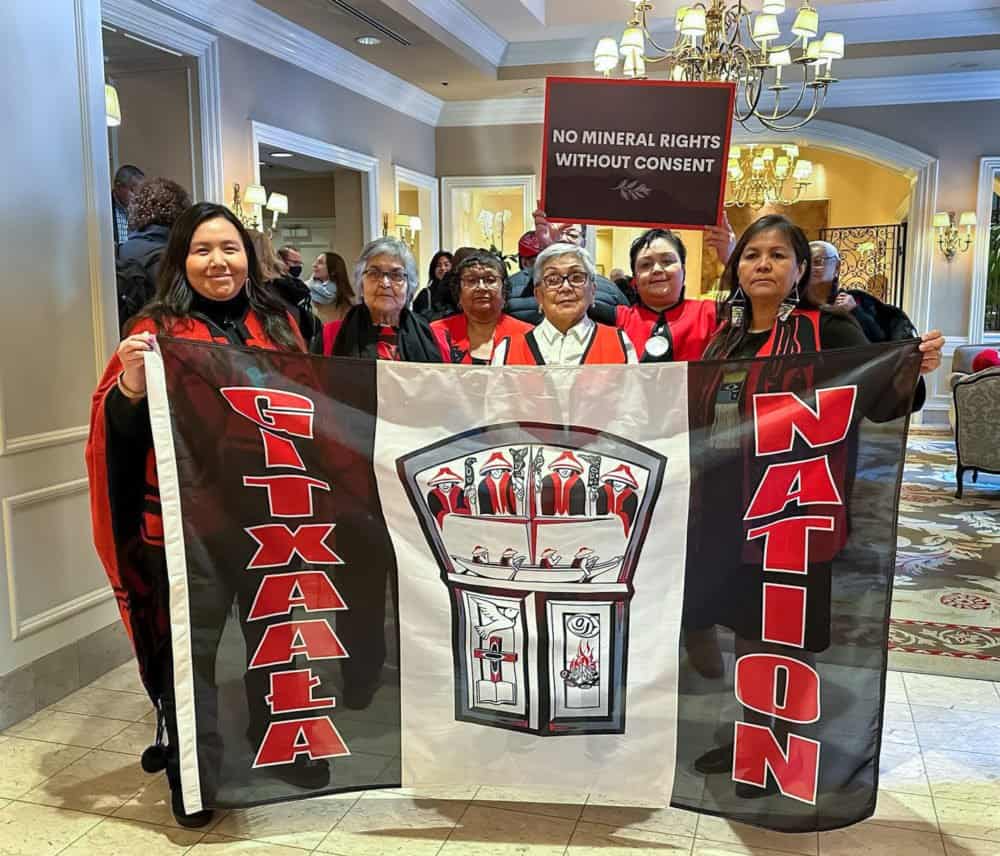
TERRACE, BC — In a decision that has sent shockwaves through the provincial legislature and the industrial sector, the British Columbia Court of Appeal issued a landmark split ruling on December 5, 2025, in Gitxaała v British Columbia (Chief Gold Commissioner). The 2-1 decision fundamentally redefines the legal weight of the Declaration on the Rights of Indigenous Peoples Act (DRIPA) and the role of the judiciary in enforcing Indigenous rights in B.C..
The ruling arrives at a critical juncture for the Northwest, where massive industrial projects—including a $6 billion north coast transmission line and the Red Chris Mine Expansion—are currently underway.
The Core Conflict: Mineral Tenures and the Duty to Consult
The case originated in 2023 when the Gitxaała Nation and the Ehattesaht First Nation challenged the province’s automated online mineral tenure system. They argued the system, which allowed mineral claims to be registered automatically without consultation, breached the Crown’s duty to consult under section 35 of the Constitution Act, 1982.
In the lower court, Justice Alan Ross agreed that the system breached the duty to consult and suspended his declaration for 18 hours to allow the province to reform the process. The province subsequently introduced a new consultation framework in March 2025. However, Justice Ross dismissed claims that the system was inconsistent with the United Nations Declaration on the Rights of Indigenous Peoples (UNDRIP), leading to the appeal.
The Majority Ruling: UNDRIP as ‘Positive Law’
Writing for the majority, Justice Gail Dickson concluded that DRIPA applies “UNDRIP in its entirety into BC positive law”.
- Immediate Obligation: The majority determined that the Act imposes an immediate, positive obligation on the provincial government to ensure all laws conform with UNDRIP.
- Judicial Oversight: Justice Dickson rejected the notion that the Act was merely a guide for prospective law reform, ruling that courts can adjudicate whether provincial legislation is consistent with UNDRIP.
- Inconsistency Found: The court specifically concluded that the current Mineral Claims Regime is inconsistent with Article 32(2) of UNDRIP, which requires free, prior, and informed consent for project approvals.
The Dissent: Legislative vs. Judicial Authority
In a sharp dissent, Justice Paul Riley argued that DRIPA does not authorize courts to adjudicate such inconsistencies. He characterized the Act as a law reform process belonging exclusively to the executive and legislative branches, stating that the consistency of the mineral regime with UNDRIP is “not justiciable” by a court.
Provincial Reaction: Premier Eby Signals Amendments
Premier David Eby’s reaction was immediate and cautious. He stated the decision puts courts “in the driver’s seat” rather than the legislature. While some opposition parties have called for the total repeal of DRIPA, Eby rejected that path, instead pledging to maintain the Act while introducing amendments. These amendments are expected to redefine the court’s role and potentially limit judicial authority to assess legislative consistency with UNDRIP.
Implications for Northern Development
The ruling introduces significant uncertainty for economic development in the Skeena region.
- Project Momentum: The federal government has designated six high-priority “nation-building” projects for streamlined reviews, including LNG Canada Phase 2 and the Red Chris Mine Expansion.
- Legal Challenges: The decision effectively invites challenges to other provincial statutes on the basis of UNDRIP inconsistency, which could lead to delays for infrastructure and mining activities.
- Economic Certainty: The provincial government has signaled that amendments to DRIPA are necessary to maintain momentum for major approvals while retaining control over the legislative process.
Skeena News Editorial Note: This ruling marks a transition in B.C. law where the symbolic nature of Indigenous rights is being replaced by enforceable, judicial oversight. The upcoming legislative amendments will be the next major battleground for industrial certainty in the Northwest.