





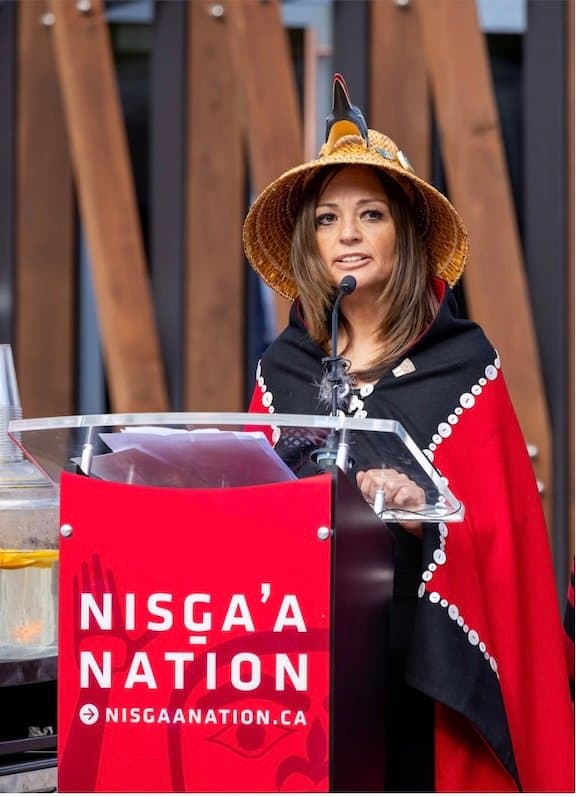
TERRACE, B.C. – A scholar from the Nisga’a Nation has been appointed to a prestigious international leadership position with the United Nations Educational, Scientific and Cultural Organization (UNESCO), a role that will advance Indigenous rights and knowledge systems on a global scale.
The Simon Fraser University professor was named the UNESCO Co-chair in Transforming Indigenous Knowledge Research Governance and Rematriation. It’s a groundbreaking collaboration that will focus on uplifting Indigenous communities in Canada and around the world by strengthening their right to self-determination over their own research, knowledge, and cultural heritage.
She will share the four-year appointment with a leading scholar from the Oraon Tribal Peoples of India.
“It is still far too uncommon to see Indigenous women leading international initiatives like this,” the newly appointed Nisga’a co-chair said in a statement. “We carry this joint appointment not only with deep honour, but with a profound sense of responsibility — to our Nations, our Ancestors, and the generations to come.”
The work will focus on supporting Indigenous-led processes for returning cultural belongings (rematriation), developing new models for research governance, and creating policy pathways for language revitalization. It will also advance Indigenous-governed approaches to modern challenges like artificial intelligence and data sovereignty.
This appointment builds on a powerful local legacy. In 2023, the Nisga’a scholar was part of the delegation that successfully brought her family’s stolen memorial pole home to the Nass Valley after it stood in a Scottish museum for nearly a century.
This new role expands that work of rematriation to a global stage.
“This announcement is about more than just a title — it’s about inviting others to dream with us, and to know that yes, we can do this work, together,” she said. “We want Indigenous matriarchs, Knowledge Keepers, youth, rightsholders, and communities to know that this Chair is for all of us.”