






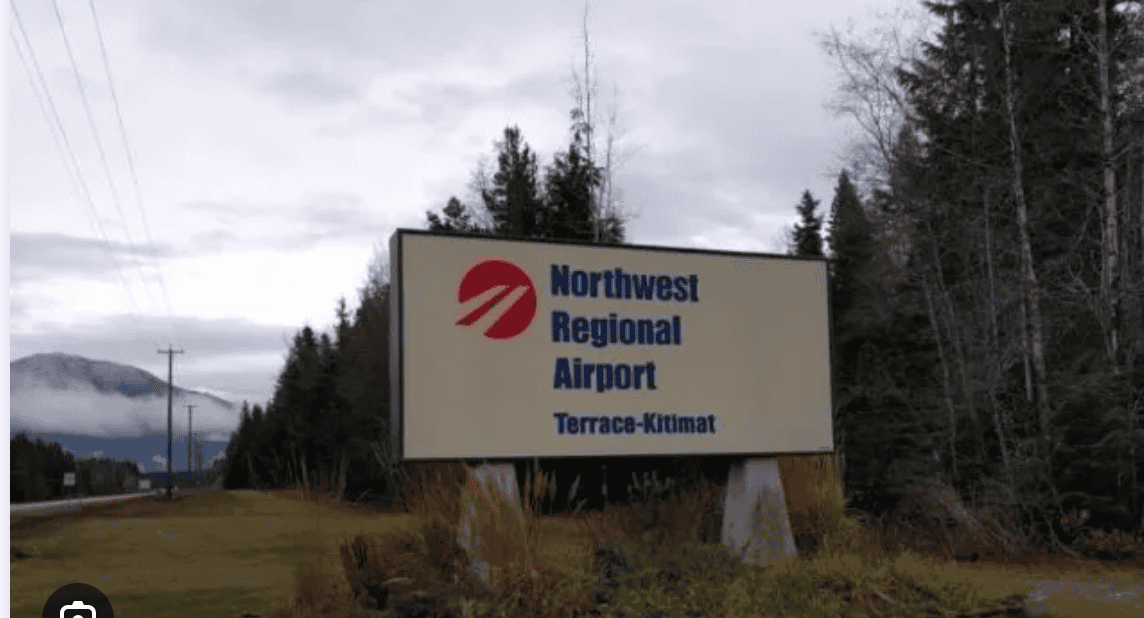
TERRACE — As the “industrial engine” of the Northwest continues to accelerate, the logistical backbone of the Skeena region—the Northwest Regional Airport Terrace-Kitimat (YXT)—is navigating the growing pains of a record-breaking era for regional aviation.
During the January 26–27 period, the terminal served as a high-volume conduit for the industrial workforce, balancing stable flight operations against a persistent challenge on the ground: a 20-to-30-minute waiting game for transportation.
Operational Stability and the Coastal Challenge
Despite the notoriously challenging coastal mountain environment, flight operations remained largely stable through the start of the week. The airport continues to serve as a vital link for the industrial workforce, with Air Canada, WestJet, and Central Mountain Air providing essential connections to Vancouver, Calgary, and beyond.
Flight Performance Snapshot (January 26–27, 2026)
| Flight Number | Airline | Route | Status / Update |
| AC 8437 | Air Canada | YVR to YXT | Arrived 9:38 AM (On Time) |
| WS 3445 | WestJet | YVR to YXT | Arrived 10:10 AM (On Time) |
| WS 3675 | WestJet | YYC to YXT | Arrived 11:25 AM (On Time) |
| CMA 8972 | Central Mountain | YVR to YXT | Arrived 10:47 AM (On Time) |
However, the “Coastal Mountain Challenge” remains a factor. WestJet flight WS3444, a staple of the corridor, highlights these operational hurdles with an average on-time departure rate of approximately 27%. On average, these flights land 32 minutes behind schedule during winter, a byproduct of the rigorous de-icing and low-visibility approaches required at the Terrace facility.
The Ground Transportation Bottleneck
While the skies are managed with precision, ground transport remains a point of consistent feedback. Arriving passengers frequently report a minimum 20-to-30-minute wait for taxis, even during non-peak periods.
“The issue isn’t just the number of people; it’s the timing,” noted one regular commuter. When mid-day flights from various carriers land in synchronization, the local fleets of Kalum Kabs, Coastal Taxi, and Kitimat Taxi are often stretched to their limits. Travelers are increasingly encouraged to utilize pre-booking services or the BC Transit Terrace-Kitimat Connector (Route 11) to mitigate these delays.
Infrastructure and the Passenger Experience
To combat these pressures, the 2023–2026 terminal expansion has added nearly 2,000 square feet to the arrivals area, modernizing baggage handling and improving passenger flow.
While waiting for departures or transportation, passengers can access:
- Chef’s Global Fusion: Full-service dining with panoramic runway views.
- Indigenous Art Collection: Curated works that celebrate the Tsimshian and Haisla heritage of the region.
- Business Connectivity: High-speed Wi-Fi and rentable boardroom spaces for the “on-the-go” professional.
Looking Ahead – A Strategic Vision
The current pressure on YXT follows the release of the final 2025 passenger numbers, which saw 261,632 people pass through the gates. While a slight dip from the 2023 peak of 280,435, the volume reflects a “stabilization” of the workforce as major projects like LNG Canada Phase 1 move toward commissioning.
The airport’s long-term Master Plan continues to forecast infrastructure needs driven by a “mining renaissance” and the potential for LNG Canada Phase 2. Future projects under the Strategic Plan include further runway enhancements and expanded corporate parking to meet the evolving needs of the Northwest.