




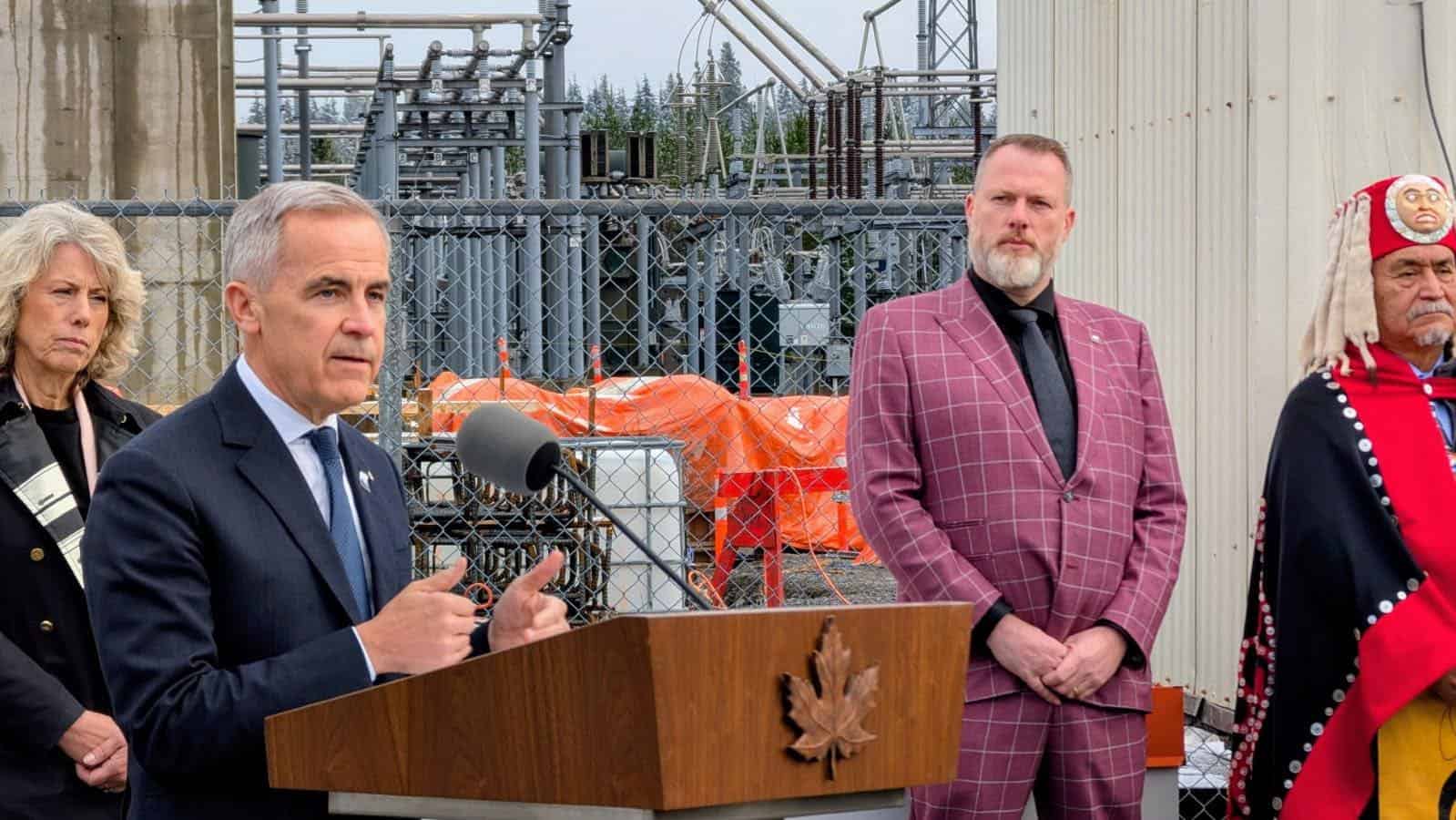
TERRACE, B.C. – The City of Terrace was catapulted onto the national economic stage this week, not just as a backdrop, but as the centerpiece of a high-stakes conversation about fiscal equity led by Mayor Sean Bujtas.
Prime Minister Mark Carney’s visit to announce the fast-tracking of “nation-building initiatives” underscored the region’s importance. However, the Mayor successfully leveraged the opportunity to shift the focus from the economic scale of the projects—such as the Ksi Lisims LNG project and the North Coast Transmission Line (NCTL)—to the severe, uncompensated strain they place on the local municipal service hub.
The Mayor confirmed a separate meeting with the Prime Minister, stating his advocacy was surgical: “The City does not receive any taxation from projects like these outside our community and we need infrastructure supports to withstand the impact.”
The Uncompensated Burden and Call for Justice
Mayor Bujtas’s core message was a request for fiscal justice: Terrace provides essential infrastructure, including roads, water, and social services, to house and support the thousands of workers required for massive, federally-sanctioned projects. Yet, the corporate taxes and industrial revenue accrue to senior governments.
The Mayor argued this means the local municipal budget is providing an unpaid subsidy to the profitability of these resource extraction efforts. He stressed that the necessary infrastructure investment “should not be costing us anything,”asserting that the City has already been “shouldering the cost of all this economic growth.”
The Terrace Substation announcement officially confirmed the fast-tracking of two core B.C. projects:
- Ksi Lisims LNG Project: Expected to contribute an estimated $17 billion to the Canadian economy over its lifetime and transform energy markets.
- North Coast Transmission Line (NCTL): A planned $6 billion, 450-kilometre power line that is the foundational infrastructure needed to electrify the new projects and is expected to create $10 billion in new economic activity.
Leadership Rooted in RBA Success
Mayor Bujtas’s success in elevating Terrace’s financial strain to the Prime Minister’s table is rooted in his sustained role as a central driver of the Northwest BC Resource Benefits Alliance (RBA).
This advocacy, which unites 21 local governments, previously resulted in a “game-changing deal” with the Province of B.C., committing $250 million over five years for critical infrastructure across Northwest communities. Terrace has already received over $34 million through this model.
This RBA model provides tangible proof that predictable, structured funding proportional to resource activity is the only viable mechanism for municipal sustainability. However, the existing RBA funds cannot sustain the compounded growth expected from the nation-building projects announced by the Prime Minister.
The Challenge Ahead – Infrastructure and Housing
The Mayor’s advocacy makes it clear that the sustained success of the MPO projects depends on a strong Terrace. The most acute symptoms of the resource boom remain: a severe, ongoing housing crisis, strains on municipal water and sewer systems, and the need for immediate social capital investment to deal with issues like homelessness and mental health.
The Mayor’s personal engagement immediately transformed the Terrace visit from a purely symbolic announcement into a direct negotiation, elevating the City’s infrastructure crisis to the highest level of federal concern. The City now requires commensurate federal support—a guaranteed, long-term funding mechanism—to shoulder the costs of these national economic ambitions and ensure Terrace remains a sustainable and livable community.