





TERRACE — The socioeconomic health of a remote municipality is often determined not by its industrial output alone, but by the robustness of its social fabric and the efficiency of its secondary support systems. In the City of Terrace, British Columbia, this role has been historically fulfilled by Volunteer Terrace, a non-profit society and registered charity that has functioned as a central nexus for community service for nearly three decades.
Serving as a bridge between enthusiastic human capital and the diverse needs of 38 non-profit community programs, Volunteer Terrace facilitates a complex ecosystem of support that spans geriatric care, youth development, and systemic judicial reform. The organization’s mission—to enhance the quality of life through dependable supports, resources, and volunteerism—is executed through a hub-and-spoke model where a single administrative center optimizes the distribution of approximately 175 volunteers annually.
Strategic Leadership and Institutional Synergy
The efficacy of Volunteer Terrace is predicated on a sophisticated governance structure overseen by Executive Director Tracey Davidson, who brings over a decade of management and restorative justice experience to the role. This stability is reinforced by a board of directors that reflects a high degree of multidisciplinary professionalization, including financial planners like Treasurer Kam Siemens and engineers like Vice Chair Andrew Roth.
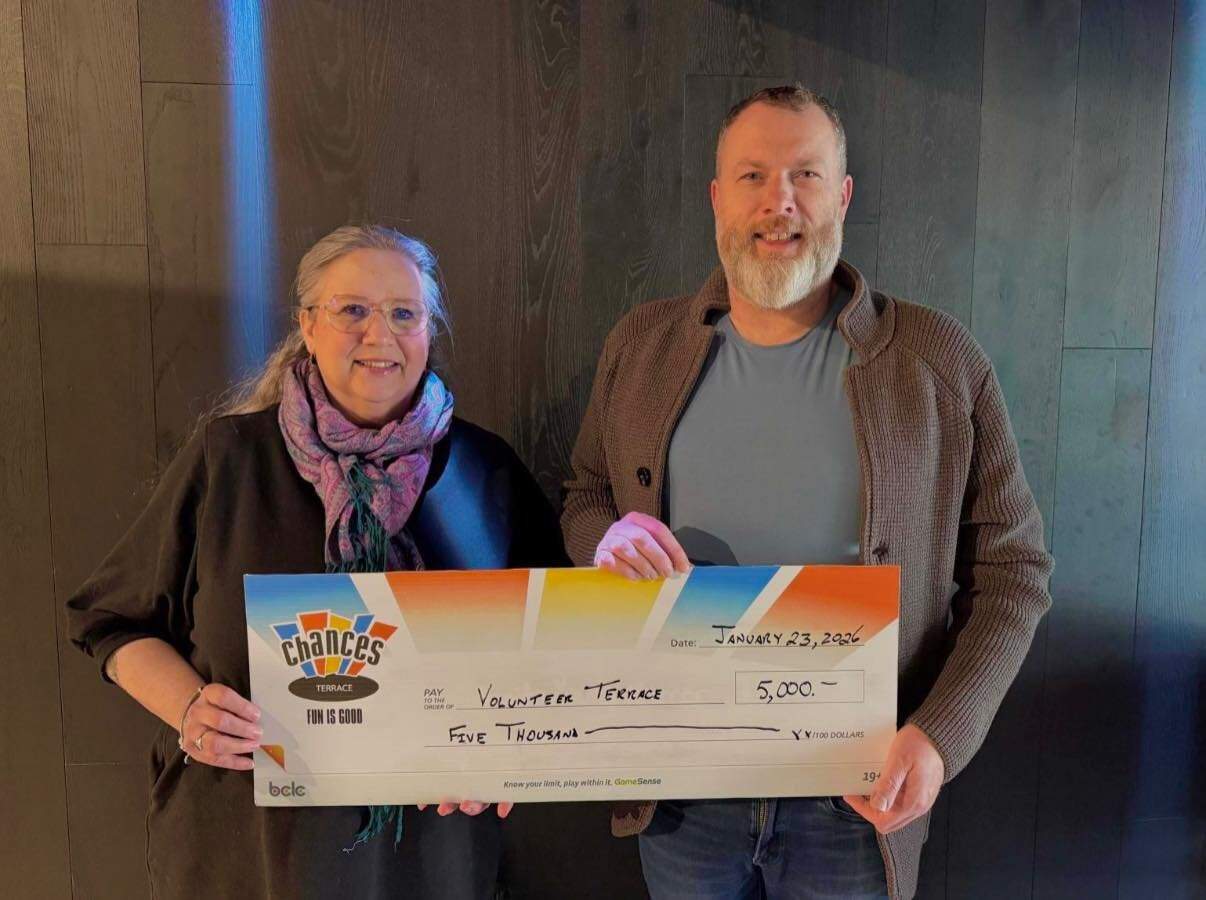
Volunteer Terrace does not operate in isolation; it is a critical partner in the municipal and industrial landscape of the Northwest. A high-profile example of this synergy occurred on January 23, 2026, when Chances Terrace and its General Manager, Sean Bujtas, presented the organization with a $5,000 donation (as shown in the attached image).
! This contribution is earmarked for the organization’s diverse programs, supporting the “long way” they go in aiding the community. This donation is part of a broader trend of local gaming revenue redistribution; in 2024 alone, Chances Terrace reinvested significant profits into the region, including $10,000 to the Dr. REM Lee Hospital Foundation and $5,000 to the Terrace Community Foundation.
The Senior Support Framework: Sustaining Autonomy
As the population of Northern B.C. ages, Volunteer Terrace mitigates the risks of social isolation through programs designed to support “aging in place”.
- Better at Home: Funded primarily through United Way B.C., this program provides non-medical assistance such as light housekeeping and grocery shopping on a sliding scale based on income.
- Therapeutic Activation Program for Seniors (TAPS): This initiative targets emotional well-being through group activities and nutritious lunches, recently benefiting from a provincial expansion of community-based seniors’ services in 2025-26.
- Snow Angels: Since 1991, this critical program has matched volunteers with older adults to ensure safe mobility by clearing driveways and sidewalks during harsh northern winters.
Restorative Justice and Youth Leadership
One of the most impactful “good things” done by Volunteer Terrace is the operation of Terrace Restorative Justice. Moving beyond the traditional adversarial legal system, the program focuses on repairing harm and offender accountability, often diverting cases from the costly court system.
Recognizing that conflict resolution starts early, Volunteer Terrace also manages a Youth Leadership Program for ages 4–24. Under the direction of Shochoy Fray, the program provides hands-on workshops that develop essential skills like teamwork and strategic thinking, ensuring young people feel valued within their community.
Narrative Conclusion
For 30 years, Volunteer Terrace has been the silent engine of social resilience in the Northwest. Through the strategic matching of volunteers to essential services, they amplify the power of a small community to solve its own problems. The recent infusion of capital from Chances Terrace ensures that this vital social infrastructure remains robust as the city enters a new era of demographic and economic challenge.