



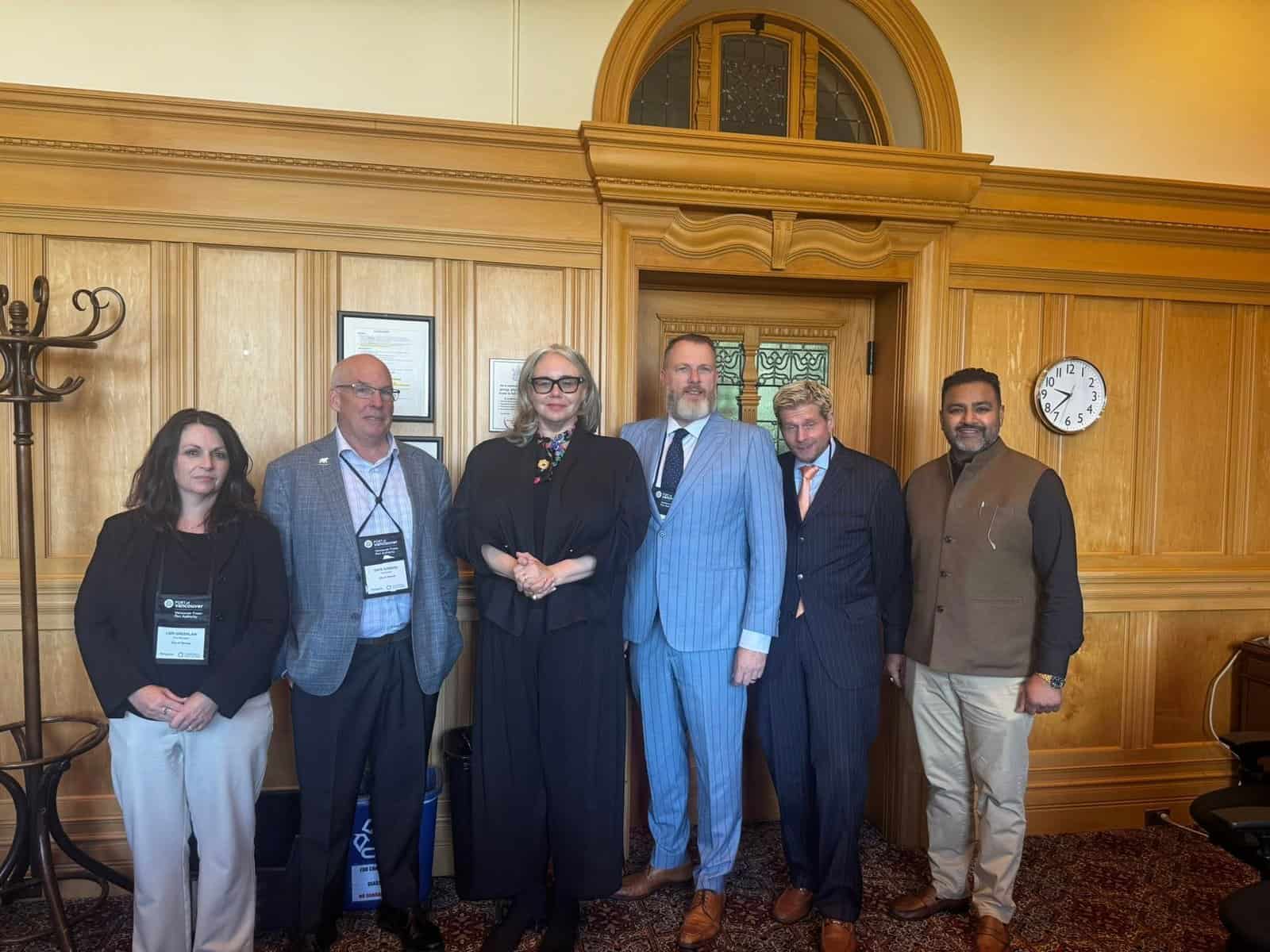
TERRACE, B.C. — As municipal governments across British Columbia continue to face rising infrastructure costs, housing pressures, and growing social complexity, 2025 marked a consequential year for the City of Terrace under Mayor Sean Bujtas and Council. A review of council decisions, financial plans, court outcomes, and capital project execution shows that the past year represented a decisive shift from long-term planning into tangible results.
Council’s efforts were rigidly aligned with the five core pillars of the 2023-2026 Corporate Strategic Plan: Responsible Asset Management, Grow Revenues & Economic Development, Livable Community, Community Wellness, and Organizational Strength.
A Landmark Legal and Financial Win
The most significant development of 2025 came in October with a crucial governance success: the City of Terrace successfully defended its right to retain a $6.18 million construction deposit tied to the Skeena Industrial Development Park (SIDP).
- Financial Protection: After the developer failed to meet contractual deadlines, the court dismissed the developer’s claim and ruled in the City’s favour. This victory secured vital capital for future industrial land investment and recouped losses from the developer’s failure to deliver infrastructure estimated to cost over $14 million.
- Economic Control: The court decision restored the municipality’s control over the industrial land, enabling the City and Kitselas First Nation to advance the SIDP Joint Venture Initiative.
Securing Long-Term Regional Funding and Fiscal Prudence
Council translated long-term regional advocacy into critical fiscal capacity by leveraging external grants to shield local taxpayers.
- RBA Funding Success: Terrace secured nearly $35 million over five years from the Northwest BC Resource Benefits Alliance (RBA), funding that now underpins a significant portion of the City’s $55.9 million capital plan for 2025–2029.
- Strategic Funding Offsets: In 2025, RBA funds were used strategically to offset the full $137,445 cost of the City’s new Social Development Program. This allowed Council to advance a core social initiative without requiring additional municipal property tax levies.
- Financial Health: The 2025-2029 Financial Plan relies heavily on internal reserves and grants (32% of total revenue), demonstrating a financially conservative approach that minimizes immediate reliance on increasing property taxes for capital improvements.
Infrastructure Delivery Moves from Paper to Pavement
2025 saw visible progress on long-deferred infrastructure projects, directly addressing the Responsible Asset Managementand Livable Community goals.
- Thomas Street Reconstruction: Completed in Fall 2025, the project delivered upgraded roadworks along with new sidewalks and multi-use pathways, supported in part by a dedicated Active Transportation grant of $413,880.
- Critical Utility Upgrades: Less visible but essential investments were made, including $4.5 million committed to the Sewer Treatment Plant outfall relocation and $250,000 for the Spring Creek Storm Drain Outlet.
- Downtown Revitalization: Planning advanced for the reconstruction of the 4600 block of Lakelse Avenue, with detailed engineering commencing in Fall 2025, keeping the project on track for anticipated construction in 2026.
Proactive Leadership on Housing and Safety
Council demonstrated governance agility by quickly implementing provincial mandates while enhancing community safety programs.
- Expedited Housing Policy: Council passed updated zoning bylaws in February 2025 to permit small-scale multi-unit housing (SSMUH) on most residential lots, acting more than a year ahead of the provincial compliance deadline. This quick action minimized regulatory uncertainty and facilitates earlier housing starts.
- Social Development Program (SDP): The City formally operationalized its SDP by hiring a dedicated coordinator, cementing social planning as a permanent municipal function, fully funded by external RBA dollars.
- Community Safety Success (C-STEP): The joint RCMP Community Safety and Targeted Enforcement Program (C-STEP) delivered measurable results. Initial reporting showed 64 additional arrests, the seizure of dangerous weapons (long swords, Katanas, hatchets), and critically, 15 or more referrals connecting repeat offenders with social supports like Northern Health and K’san Society.
Conclusion
The record from 2025 does not suggest that Terrace’s long-term challenges have been solved. However, the year does stand out for execution. By protecting public funds, securing long-term non-tax revenue, delivering infrastructure, and responding quickly to legislative change, Mayor Sean Bujtas and Council demonstrated a level of operational follow-through that has established a solid foundation for sustained delivery in 2026.