



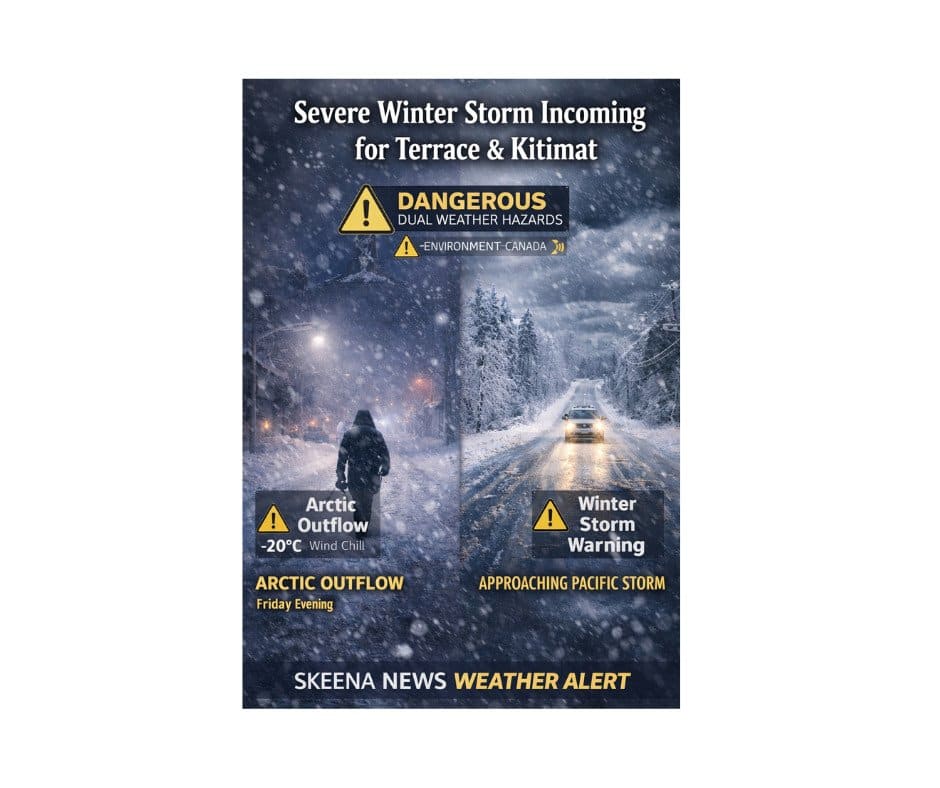
SKEENA NEWS WEATHER ALERT — Residents of the North Coast inland sections, including Terrace and Kitimat, are urged to prepare for a dangerous shift in weather as a potent Pacific frontal system collides with an entrenched arctic airmass. Environment Canada has issued multiple yellow warnings, signaling moderate impacts and high confidence in hazardous conditions developing over the next 48 hours.
Dual Hazards: Arctic Outflow and Approaching Storm
As of Saturday morning, the region remains gripped by a Yellow Warning for Arctic Outflow.
- Current Conditions: Bitterly cold arctic air combined with outflow winds gusting up to 50 km/h are producing wind chill values near minus 20.
- Risks: Frostbite and hypothermia can occur within minutes. Residents are advised to limit outdoor activities and ensure adequate shelter for pets and livestock until conditions improve this afternoon.
The Winter Storm Timeline
The reprieve from the cold will be short-lived as the Winter Storm Warning takes effect, bringing a transition from heavy snow to a dangerous period of freezing rain.
| Phase | Timing | Expected Hazard |
| Initial Onset | Saturday Afternoon | Snow begins to fall across inland sections. |
| Intensification | Saturday Night – Sunday | Heavy snow develops. Accumulations of 20 to 30 cm expected by Sunday evening. |
| The Transition | Late Sunday Afternoon | Snow becomes mixed with a prolonged period of freezing rain. |
| The Changeover | Monday Morning/Late Day | Freezing rain continues through Monday morning before transitioning to rain mixed with snow. |
Impact on Travel and Infrastructure
The combination of heavy snow and freezing rain is expected to make roads and walkways extremely difficult to navigate.
- Transportation: Expect significant disruptions to travel on Highway 16 and regional corridors. Travel will likely be challenging and is discouraged unless necessary.
- Utilities: The weight of freezing rain on trees and power lines may lead to disruptions in services and utilities.
- Pedestrians: Walkways will become hazardous as snow is capped by a layer of ice.
Local Emergency Resources in Terrace
If you or someone you know is at risk due to the extreme cold, the following services and locations are available:
- Warming Centers: During extreme weather events, the K’san Society typically operates shelters and warming spaces. Check with their locations at the Skeena Shelter (4444 Lakelse Ave) or the All Nations Centre for current capacity.
- Emergency Contacts:
- Police/Fire/Ambulance: 911.
- Terrace RCMP (non-emergency): 250-638-7400.
- BC Hydro (Power Outages): 1-800-BCHYDRO (1-800-224-9376) or dial *HYDRO (*49376) on your mobile.
- City of Terrace Public Works (Water/Sewer Emergencies): 250-615-4021.
How to Prevent Frozen Pipes
With temperatures dropping between -8°C and -14°C and wind chills reaching -20°C, the risk of burst pipes is high. Follow these steps immediately:
- Keep the Heat On: Set your thermostat to at least 15°C, even if you are leaving the house.
- Let Faucets Drip: Allow a very thin stream of water to run from the faucet furthest from your water meter. This constant movement makes it much harder for water to freeze.
- Open Cabinet Doors: Keep kitchen and bathroom cabinet doors open to allow warmer room air to circulate around the plumbing under the sinks.
- Insulate Vulnerable Areas: Use foam pipe insulation on any pipes located in unheated areas like crawl spaces, attics, or near outside walls.
- Disconnect Hoses: Ensure all garden hoses are disconnected and outdoor faucets are shut off and drained.
What to Do if Your Pipes Freeze
If you turn on a faucet and only a trickle comes out, your pipes may already be frozen:
- Keep the Faucet Open: As you treat the frozen pipe and the ice begins to melt, water will need to flow through the open end.
- Apply Heat Safely: Use an electric heating pad, a hair dryer on a low setting, or wrap pipes with towels soaked in hot water.
- NEVER Use a Flame: Do not use a blowtorch, kerosene or propane heater, or any open flame device to thaw pipes, as this is a major fire hazard and can damage the pipes.
- Know Your Main Shut-off: If a pipe has already burst, immediately turn off the main water shut-off valve to your home to prevent flooding.
Skeena News Safety Tip: As the freezing rain develops on Sunday, ensure your emergency kit (water, non-perishable food, flashlights, and extra blankets) is easily accessible in case of power outages caused by ice buildup on lines.